Azul Macaubas Quartzite is a natural quartzite recognized for blue movement, white veining, and dramatic mineral variation. It is quarried mainly in Brazil, although color and availability can change between blocks. Each slab is different. That difference is the appeal.
The U.S. Geological Survey’s Mineral Commodity Summaries classify quartzite within the broader dimension-stone sector, but they do not isolate Azul Macaubas Quartzite as a separate product. This limitation matters. Market reports often group quartzite with marble, granite, or other natural stones, making precise production data difficult to verify. The Natural Stone Institute’s technical guidance emphasizes inspection, proper fabrication, sealing, and installation. Those steps influence long-term performance more than marketing language does.
Architect Frank Lloyd Wright offered a useful principle: “Study nature, love nature, stay close to nature.” Azul Macaubas Quartzite reflects that idea through its irregular blue patterns and geological depth. It is commonly used for kitchen islands, countertops, bathroom vanities, wall panels, fireplace surrounds, and statement furniture. Its hardness generally supports demanding interior applications, but it is not maintenance-free. Fabricators must inspect slabs for fissures, resin treatment, thickness variation, and edge sensitivity. Homeowners should also confirm the stone’s finish and care requirements before purchase.
Beauty can mislead. A vibrant sample may not represent the next slab. This article examines what Azul Macaubas Quartzite is, where it is used, and how professionals evaluate its suitability. Reliable decisions require verified quarry information, experienced fabrication, and realistic expectations about natural variation.
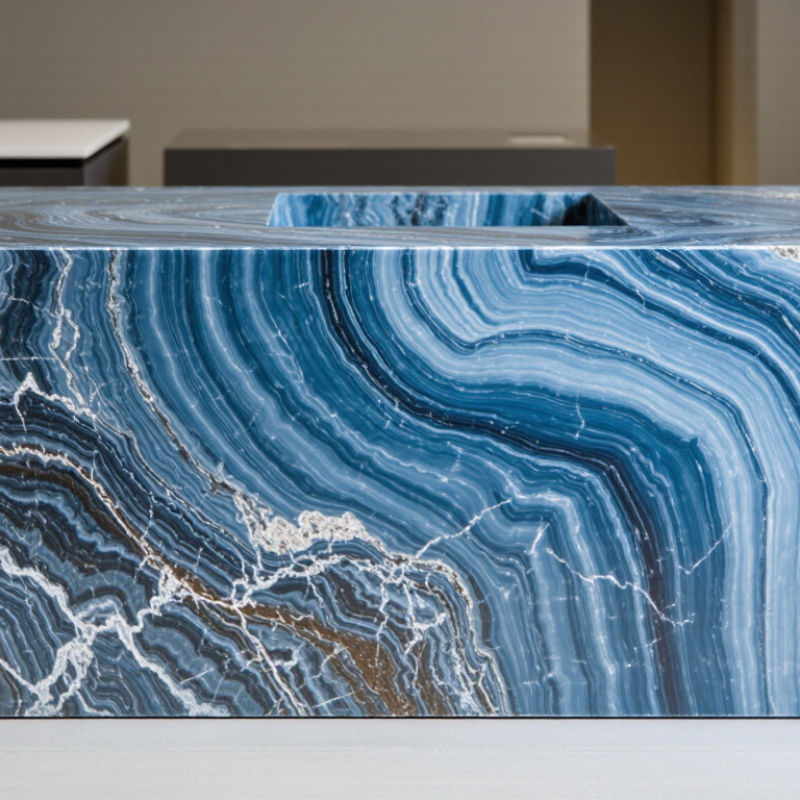
Azul Macaubas quartzite is a natural metamorphic stone known for its blue background and flowing white, gray, or golden veins. It is not manufactured or simply painted to look blue. The stone formed from quartz-rich sandstone buried deep within the Earth. Intense pressure and heat gradually changed its original grains, creating a harder, interlocking structure.
Its blue color often relates to dumortierite and other mineral inclusions within the quartz matrix. Geological conditions were not identical across every deposit, so shades and patterns can vary noticeably.
Some slabs show calm, misty blue surfaces. Others display dramatic movement, like brushstrokes across frozen water. The name can also be used inconsistently in the stone trade, which deserves caution. A reliable supplier should provide geological information and test results, not only attractive photographs.
Tips: Request a labeled sample before choosing a slab. Examine it under warm and cool lighting. Ask for water absorption, flexural strength, and abrasion data. These details help match the stone to countertops, bathroom vanities, wall panels, flooring, and other applications. Sealing may improve stain resistance, but it does not make the surface maintenance-free. Even experienced professionals can misjudge a vein’s visual impact after installation. That possibility should be considered.

Azul Macaubas quartzite is recognized for cool blue backgrounds, gray clouds, and flowing white veins. Some slabs also show gold or brown mineral streaks. The pattern can resemble frozen water or distant mountain ridges. No two slabs look identical.
Typical Performance
Published quarry test sheets using ASTM C97 methods commonly report densities near 2.65–2.75 g/cm³. Water absorption often remains below 0.5%, but results vary by quarry and sample.
Material Considerations
The Natural Stone Institute’s Dimension Stone Design Manual stresses that project decisions should rely on current testing, not appearance alone. Quartzite generally reaches about 7 on the Mohs hardness scale. It resists scratching better than many softer decorative stones. Still, edges can chip.
The stone suits kitchen counters, bathroom vanities, wall panels, fireplace surrounds, and selected flooring. Its pale blue surface can brighten a narrow room, while dramatic veining creates a strong focal point.
Care & Installation
Sealing helps limit staining, especially around sinks and cooking areas. It is not maintenance-free. Acidic cleaners may dull adjacent minerals or damage surface treatments.
Outdoor Applications
Outdoor use requires checking freeze-thaw, slip, and ultraviolet performance through project-specific reports.
Specification Note
The label can be imperfect. Some commercial slabs contain altered rock or gneiss-like structures, so visual identification is unreliable. Ask for petrographic analysis and ASTM test results before specifying large installations.
Azul Macaubas quartzite is a natural stone known for blue tones, white movement, and darker mineral lines. It is commonly associated with Brazilian quarries. Unlike engineered quartz, it forms naturally through intense heat and pressure underground. Its appearance changes from block to block. No two slabs are identical.
Extraction begins with geological surveys and careful bench planning. Quarry teams remove surface material before cutting the stone into workable sections. Diamond wire saws create controlled cuts through the rock. Large blocks are then separated with drilling equipment and lifting machinery. Excessive force can create hidden fractures. This is where experience matters. A skilled quarry team studies natural cracks before choosing each cutting line.
The blocks travel to a processing facility for trimming and inspection. Gang saws or bridge saws divide them into slabs. Technicians may use resin to fill small fissures and reinforce vulnerable areas. Slabs are then polished, honed, or given a leathered texture. Water systems cool the cutting tools and reduce airborne dust. Quality checks examine thickness, flatness, color variation, and repaired areas. Some imperfections remain visible, and that is not always a defect. It can reflect the stone’s geological history. Fabricators commonly use Azul Macaubas for kitchen islands, bathroom vanities, wall panels, fireplace surrounds, and selected flooring. Precise templates help limit waste, although perfect efficiency is rarely possible.
| Data Dimension | Key Information | Practical Relevance |
|---|---|---|
| Material Type | Azul Macaubas is a natural quartzite, a metamorphic rock formed when quartz-rich sandstone is subjected to intense heat and pressure. | It is different from engineered quartz because it is quarried as a natural stone and is not manufactured from crushed quartz and resin. |
| Typical Appearance | The stone commonly shows blue, blue-gray, or blue-green backgrounds with white, gray, or darker mineral veining. Pattern and color vary from block to block. | Each slab has a distinctive natural pattern, making slab selection and layout planning important for large surfaces. |
| Main Mineral Composition | Quartz is the dominant mineral. Smaller amounts of feldspar, mica, and other minerals may contribute to the stone’s color, texture, and veining. | Mineral variation affects the final appearance, polish response, and the visual consistency between slabs. |
| Geological Source | The name is associated with natural stone deposits in Brazil, where blue quartzite varieties are extracted from metamorphic rock formations. | Country of origin does not guarantee identical appearance; color, veining, and quality can differ among quarries and individual blocks. |
| Quarrying Method | Quarry workers typically remove overburden, identify suitable stone zones, drill controlled holes, and use diamond wire saws or other controlled cutting methods to separate large blocks. | Controlled extraction helps reduce unwanted fractures and preserves larger blocks suitable for slab production. |
| Block Inspection | Extracted blocks are checked for cracks, mineral pockets, structural weaknesses, color consistency, and usable dimensions before processing. | Inspection determines whether a block is suitable for premium slabs, smaller products, or other stone applications. |
| Primary Processing | Large blocks are sawn into slabs using multi-wire saws or gang-saw equipment. Water is generally used during cutting to cool the tools and control stone dust. | Slab thickness and cutting direction influence the visibility and orientation of the natural veining. |
| Surface Finishing | Slabs may be calibrated, resin-treated where appropriate, polished, honed, leathered, or given another specified finish before fabrication. | A polished finish emphasizes color and veining, while honed or textured finishes provide a softer appearance and different slip characteristics. |
| Hardness and Durability | Quartzite is generally a hard and durable natural stone. Its exact performance depends on mineral composition, existing fractures, fabrication quality, and installation. | It is suitable for many high-use interior surfaces, but it can still chip at edges, crack under severe impact, or be damaged by unsuitable chemicals. |
| Water and Stain Resistance | Quartzite has low porosity compared with many other natural stones, but it is not automatically nonabsorbent. Unsealed or poorly sealed areas may absorb liquids. | A suitable penetrating sealer and prompt cleanup help reduce staining, especially on kitchen and bathroom surfaces. |
| Common Interior Uses | Common applications include kitchen countertops, bathroom vanities, shower walls, fireplace surrounds, backsplashes, wall panels, tabletops, and selected flooring projects. | Its blue coloration creates a strong decorative feature and works particularly well as a focal surface in residential and commercial interiors. |
| Outdoor Applications | It may be used for selected outdoor countertops, wall cladding, or decorative elements when the specific stone, finish, climate, and installation system are suitable. | Outdoor use requires evaluation of freeze-thaw exposure, ultraviolet light, moisture, thermal movement, and local installation standards. |
| Fabrication Requirements | Cutting, edging, sink openings, and polishing require diamond tooling and experienced stone fabrication. Adequate support is necessary for large or cantilevered pieces. | Professional fabrication helps control chipping, cracking, uneven edges, and failures around cutouts or unsupported spans. |
| Routine Maintenance | Clean the surface with a soft cloth or sponge, warm water, and a pH-neutral stone cleaner. Wipe spills promptly and follow the sealer manufacturer’s maintenance guidance. | Avoid abrasive powders, harsh acids, strong alkaline products, and prolonged exposure to staining liquids unless the product is confirmed safe for natural stone. |
| Selection Considerations | Review the actual slab, inspect for fissures and repairs, confirm thickness and finish, and plan seam locations before fabrication. | Because natural variation is significant, photographs or small samples may not represent the complete appearance of the finished installation. |
| Environmental Considerations | Quarrying and processing require land disturbance, energy, water, transportation, and responsible management of stone slurry and waste materials. | Long service life can reduce replacement frequency, while responsible sourcing and efficient fabrication can help limit project impacts. |
Azul Macaubas quartzite is a natural metamorphic stone known for blue backgrounds, white movement, and occasional gray or gold veining. Its visual character makes every slab different. That variation matters in architectural planning. A small sample may not show the strongest vein or color shift.
Common interior applications include kitchen islands, countertops, backsplashes, bathroom vanities, shower walls, fireplace surrounds, and feature walls. Designers often use book-matched slabs on islands or vertical panels. The effect can resemble flowing water across the surface. In hospitality projects, it also suits reception desks, bar fronts, and luxury washrooms.
The 2024 Houzz U.S. Kitchen Trends Study identifies quartz as a leading countertop choice, showing continued demand for durable, low-maintenance surfaces. However, Azul Macaubas is natural quartzite, not engineered quartz. The distinction affects sealing, fabrication, and care. The U.S. Geological Survey’s 2024 dimension-stone data also confirms that natural stone remains an established architectural material category, though color-specific production figures are rarely reported.
Tips: Request full-slab images, not only small samples. Check vein direction before cutting. Confirm absorption testing and sealing recommendations with the fabricator. A honed finish may soften reflections, but it can reveal marks more easily. I would also inspect the slab under warm and cool lighting; blue tones can change unexpectedly.
Azul Macaubas is a natural quartzite known for its blue tones, flowing mineral veining, and high hardness. The suitability ratings below are indicative scores based on typical quartzite performance, slab fabrication requirements, exposure conditions, and common design practice.
Reading the chart: Higher scores indicate applications where the stone’s durability, visual impact, and practical fabrication characteristics are generally well suited. Final selection should still consider sealing, edge details, support requirements, finish, and the fabricator’s recommendations.
Azul Macaubas quartzite is a natural stone known for blue tones and flowing white or gray veins. Selection requires more than matching a small sample. Each slab can change dramatically across its surface. View full slabs under the room’s actual lighting, if possible. Check for open fissures, resin-filled areas, edge weakness, and consistent thickness. A fabricator should explain how vein direction will appear at seams and cutouts. Finish matters too. Polished surfaces emphasize color, while honed finishes soften reflections and show marks differently.
Before installation, confirm the stone’s absorption with a professional test. Some slabs need sealing, while others need less frequent treatment. Do not assume a calendar alone is reliable. A penetrating sealer may help resist oil and moisture. Not stain-proof. Apply it only to clean, dry stone, following the stated dwell time. Poor preparation can leave a cloudy film. That mistake is surprisingly common.
For daily care, wipe spills quickly with warm water and a pH-neutral stone cleaner. Use soft cloths. Lemon juice, vinegar, strong bleach, and scouring powders can dull the finish or weaken protection. Use trivets under hot cookware and boards beneath sharp tools. Although quartzite is hard, sudden impact can chip corners and sink cutouts. Inspect high-use areas every few months. If water darkens the stone briefly, absorption may be increasing. Re-sealing should follow testing and wear, not a rigid annual rule. A repaired fissure may remain faintly visible, even when the work is technically sound.
