Top 10 Benefits of Brass Die Casting for Global Buyers?
Brass Die Casting is a crucial method in modern manufacturing. It offers numerous advantages that appeal to global buyers. In today's competitive market, understanding these benefits can help businesses make informed decisions.
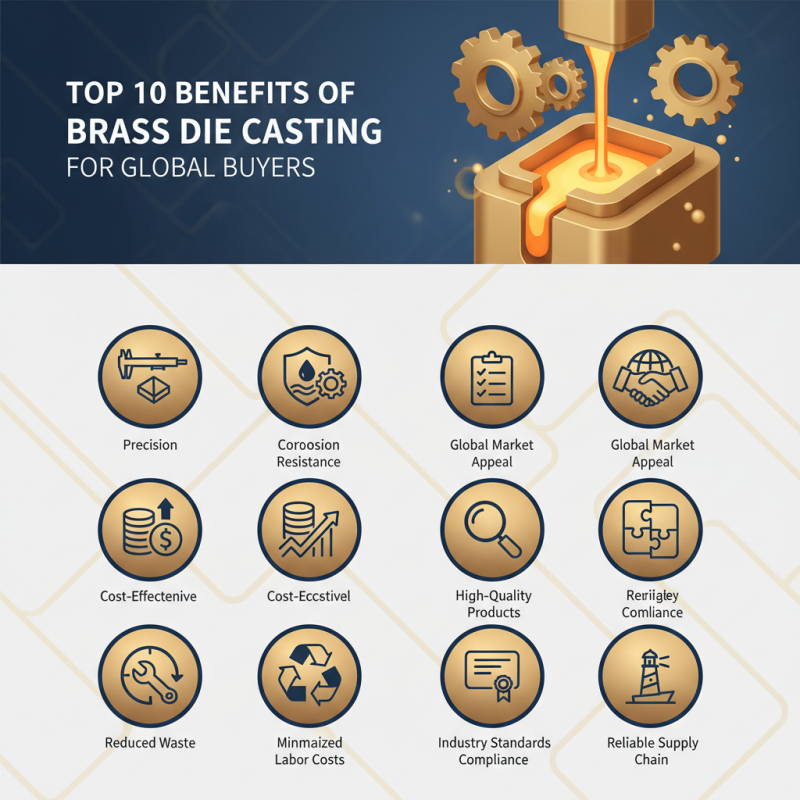
One major benefit is precision. Brass Die Casting allows for tight tolerances and exact specifications. This precision results in high-quality products that meet industry standards. Additionally, the durability of brass ensures longevity. Products made from brass resist corrosion and wear, which is essential in many applications.
Cost-effectiveness is another aspect worth noting. While the initial investment can be significant, the long-term savings are considerable. Brass Die Casting reduces waste and minimizes labor costs. However, it is important to choose a reliable supplier. Quality control is vital in ensuring the finished products’ integrity. Evaluating potential partners can be a challenge but is necessary for success in this field.
Advantages of Brass Die Casting for Precise Component Manufacturing
Brass die casting plays a crucial role in precise component manufacturing. This process allows for the creation of intricate shapes with tight tolerances. Components are often used in industries such as automotive, electronics, and aerospace. According to a recent industry report, brass die casting can achieve dimension tolerances as tight as ±0.1 mm, making it ideal for high-precision applications.
One key advantage of brass is its excellent corrosion resistance. This quality extends the longevity of components, reducing maintenance costs. The Copper Development Association states that brass components can last significantly longer than those made with other materials. However, challenges exist. Managing temperature during casting remains critical. Variations can lead to defects, impacting the final product's quality.
Cost efficiency is another important factor. Brass die casting can be more economical compared to other metal fabrication techniques. A study from the Die Casting Association indicates that components manufactured through die casting often have lower production costs per unit. Yet, buyers must consider setup costs and material prices, which can fluctuate. Precision is vital, but it requires careful execution throughout the process.
Top 10 Benefits of Brass Die Casting for Global Buyers
Cost Efficiency of Brass Die Casting in High-Volume Production
Brass die casting has emerged as a key manufacturing process for high-volume production. This method is not only efficient but also offers significant cost savings. According to industry research, brass die casting can reduce production costs by up to 30% compared to traditional machining methods. This is largely due to its ability to produce intricate designs with minimal waste.
The high-speed production capabilities make brass die casting suitable for large batches. It allows manufacturers to deliver high-quality parts fast. Statistical data reveals that companies engaged in high-volume brass die casting can achieve production rates reaching 300 parts per hour. This efficiency minimizes labor costs and optimizes resource allocation. However, maintaining quality at such high speeds requires constant scrutiny and adjustments, creating a need for skilled workforce training.
Moreover, while brass’s durability is a highlight, the initial setup costs for die casting can be high. Investing in the right technology is crucial. Companies must balance these costs against potential long-term savings. This reflection on the trade-off between upfront expenses and ongoing efficiency is essential in decision-making for buyers. The challenge remains to harness the full potential of brass die casting while ensuring quality and cost-effectiveness at every stage.
Corrosion Resistance and Durability of Brass Components in Various Industries
Brass die casting offers significant advantages, particularly in terms of corrosion resistance and durability. In harsh environments, brass components outshine many alternatives. For instance, they resist oxidation and discoloration, making them ideal for outdoor applications. This natural durability contributes to the longevity of products used in various industries, such as plumbing and automotive.
Moreover, the adaptability of brass allows for intricate designs without compromising strength. Detailed fittings and connectors can withstand high pressure and temperature. Yet, it is essential to acknowledge that not all brass formulations are created equal. Some may corrode more quickly if not treated properly. Buyers should consider the specific environment where the components will be used.
Additionally, while brass is generally reliable, it requires regular maintenance to retain its best qualities. Over time, if exposed to aggressive chemicals, even brass can fail. Thus, a thorough understanding of the specific application and environment is crucial. Emphasizing quality control can lead to better outcomes and longer-lasting components.
Improved Surface Finish and Aesthetic Appeal of Brass Die Cast Products
Brass die casting offers a superior surface finish that appeals to many industries. This process produces smoother surfaces compared to other methods. The fine details realized in brass die casting improve the overall aesthetic of the products. Buyers often show preference for these refined finishes. Visually appealing items can significantly enhance customer satisfaction.
Manufacturers can achieve consistent surface quality through precise techniques. However, challenges such as air entrapment may sometimes compromise this quality. Continuous improvement in processes is essential to overcome these issues. It's important for buyers to ensure they work with skilled professionals who understand these nuances. Understanding potential shortcomings allows for better decision-making during procurement.
Ultimately, brass die casting can elevate a product's appearance and performance. A well-finished brass item can communicate quality and craftsmanship. Global buyers appreciate these attributes. The aesthetic appeal of brass die casting cannot be overlooked in today's competitive market. Still, attention to detail during production remains crucial.
Rapid Lead Times for Brass Die Casting Compared to Other Manufacturing Methods
Brass die casting offers significant advantages in terms of rapid lead times, making it a preferred choice for global buyers. Conventional manufacturing methods, such as machining and traditional casting, often require longer setup times and extensive machining processes. According to industry reports, brass die casting can reduce production lead times by up to 50%. This efficiency is critical for manufacturers under pressure to meet tight deadlines.
Lead times in brass die casting average around two to four weeks. This is notably faster than other processes, which can extend to several months depending on complexity. For instance, the ability to produce intricate designs in a single operation streamlines production workflows.
However, it’s important to acknowledge that fluctuations in demand can sometimes lead to inconsistent lead times.
Moreover, technology integration in the die casting process improves speed and accuracy. Automation decreases human error and enhances repeatability, crucial for high-volume production. While brass die casting is efficient, it's essential for buyers to consider supplier capabilities and communication dynamics. Not every supplier can consistently meet rapid timelines. Regular performance assessments of suppliers can mitigate risks and improve reliability in lead time delivery.