China Top 10 20ft Office Container Manufacturers?

Choosing a reliable 20ft office container manufacturer in China requires more than comparing prices. Buyers must examine design experience, material quality, production capacity, and after-sales support. A low quotation may hide thinner steel, weaker insulation, or incomplete electrical systems. That matters on a busy construction site.

This guide introduces China’s top 10 20ft office container manufacturers and explains how they differ. The evaluation considers factory experience, customization ability, welding quality, fire-resistant panels, wiring standards, delivery performance, and export service. It also reviews practical details, such as window placement, floor loading, ventilation, lighting, and air-conditioning preparation. Small details matter.

The best suppliers usually provide drawings before production, clear specifications, inspection photos, and realistic delivery schedules. Experienced manufacturers can adapt an office container for project sites, security rooms, classrooms, sales offices, or temporary accommodation. However, “top” is not an absolute label. Rankings can change with location, order size, certification requirements, and current production capacity.

Some companies may appear strong online but offer limited technical support after payment. Others have excellent workshops but weak communication for overseas buyers. This guide therefore encourages independent verification, including factory audits, sample inspections, contract reviews, and confirmation of applicable local building requirements. No list can replace due diligence.

The goal is practical guidance, not exaggerated promotion. Buyers should compare complete quotations, not attractive unit prices alone. A dependable 20ft office container should arrive safe, functional, documented, and ready for efficient installation. Even careful research can miss something. That is worth remembering.
China Top 10 20ft Office Container Manufacturers?

ISO 668 Dimensions: 6.058m × 2.438m × 2.591m for 20ft Units

China Top 10 20ft Office Container Manufacturers

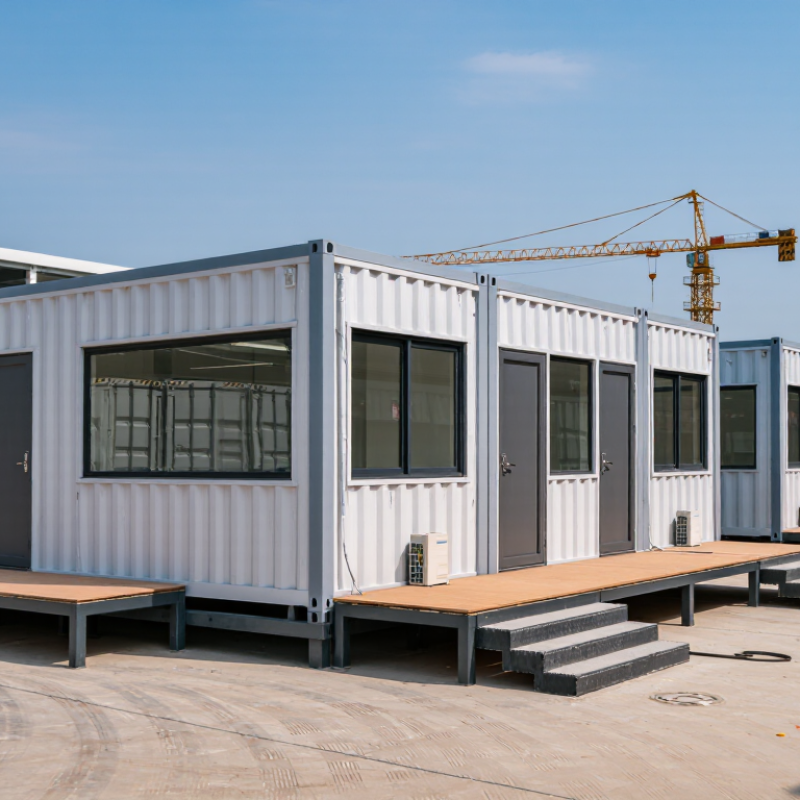
When comparing China’s leading 20ft office container manufacturers, begin with ISO 668 dimensions. A standard unit measures 6.058m long, 2.438m wide, and 2.591m high externally. These figures matter during transport, lifting, and site positioning. A few millimeters can affect door clearance, corner fitting, or stacking performance.

Experienced manufacturers should show dimensional drawings, steel grades, welding procedures, and inspection records. Ask whether the quoted size describes the external shell or usable interior. Internal space is smaller after wall panels, insulation, flooring, wiring, and ceiling finishes are installed. On one project, a planned desk layout looked practical until insulation reduced the clear width. That mistake was avoidable.

Reliable factories also explain tolerance control instead of promising perfect measurements. Check corner post alignment, roof drainage, floor loading, and lifting points. A finished office container may include windows, air conditioning, lighting, and fire-resistant panels, but each addition changes weight and maintenance needs. Request factory photographs, test reports, and a sample inspection before production. Some suppliers communicate well yet provide weak documentation. Others build accurately but overlook ventilation details. That difference deserves careful review.
Ranking China’s Top 10: Export Volume, Factory Capacity, and ISO 9001

China Top 10 20ft Office Container Manufacturers?

Ranking China’s top ten requires more than counting online listings. Export volume should be checked through shipment records, repeat orders, and delivery consistency. A factory with steady quarterly exports usually understands packing, port handling, and documentation better. However, shipment numbers can include trading partners, not only factory output. That distinction needs careful verification.

Factory capacity is another important measure. Inspectors should review welding lines, cutting equipment, paint areas, and final assembly stations. A practical visit may reveal whether a claimed monthly output matches the available workforce and production space. Look for organized steel storage, labeled components, and visible quality checkpoints. Small details often expose larger weaknesses.

ISO 9001 certification adds useful structure, but it is not proof of perfect products. Buyers should confirm the certificate’s validity, scope, issuing body, and latest audit status. Internal records should cover incoming steel, insulation thickness, electrical installation, and pre-shipment inspections. Export experience, production capacity, and quality systems must be assessed together. Rankings may still contain gaps because manufacturers report figures differently. That limitation deserves attention. A careful buyer should request recent export evidence, factory photographs, inspection reports, and references for comparable 20ft office container projects.

China Top 10 20ft Office Container Manufacturers — Ranking by Export Volume, Factory Capacity, and ISO 9001
Rank Anonymous Manufacturer ID Primary Production Region Estimated 2024 Export Volume
(20ft-equivalent units)
Annual Factory Capacity
(20ft-equivalent units)
ISO 9001 Quality-System Status Typical Office-Container Output Export Market Coverage
1 Manufacturer A Jiangsu 8,000–10,000 12,000–15,000 Certified Insulated offices, modular workspaces, sanitation modules Asia, Europe, Middle East, Africa
2 Manufacturer B Guangdong 6,500–8,000 10,000–13,000 Certified Flat-pack offices, site cabins, retail and accommodation units Europe, Southeast Asia, Oceania, Africa
3 Manufacturer C Shandong 5,500–7,000 8,000–11,000 Certified Welded container offices, dormitories, project-site buildings Middle East, Africa, Central Asia, Europe
4 Manufacturer D Zhejiang 4,500–6,000 7,000–9,000 Certified Prefabricated offices, guardhouses, classrooms and clinics Europe, North America, Asia-Pacific
5 Manufacturer E Henan 3,800–5,200 6,000–8,500 Site scope varies Economical office cabins, worker accommodation, storage units Africa, Middle East, Southeast Asia
6 Manufacturer F Fujian 3,200–4,600 5,000–7,000 Certified Knock-down offices, portable classrooms, commercial modules Southeast Asia, Oceania, Europe
7 Manufacturer G Hebei 2,800–4,000 4,500–6,500 Certified Heavy-duty site offices, mining and construction facilities Central Asia, Middle East, Africa
8 Manufacturer H Hunan 2,300–3,500 3,800–5,500 Site scope varies Standard office containers, accommodation and utility rooms Asia, Africa, Latin America
9 Manufacturer I Chongqing 1,800–2,900 3,000–4,500 Certified Modular offices, emergency facilities and remote-site units Asia, Latin America, Middle East
10 Manufacturer J Anhui 1,500–2,500 2,500–4,000 Publicly disclosed Entry-level office containers, kiosks and temporary buildings Asia, Africa, Middle East

Evaluation basis: The ranking uses estimated export volume, stated or observed production capacity, product specialization, international market coverage, and ISO 9001 quality-system information. Export and capacity figures are presented as practical ranges because many private manufacturers do not publish audited annual production data.

ISO 9001 note: Certification may apply to a specific legal entity, manufacturing site, or production scope. Buyers should request the current certificate number, issuing body, validity period, and certified site before placing an order.

Manufacturer Profiles: Layouts, Materials, Fire Ratings, and Custom Options

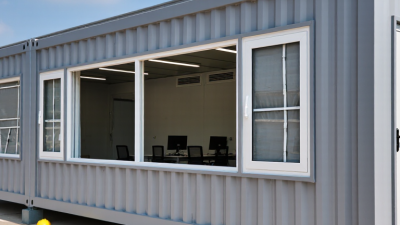
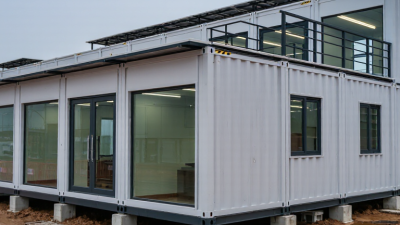
When comparing China’s top 10 20ft office container manufacturers, look beyond polished catalog photographs. A reliable profile should explain layout planning, material grades, fire ratings, and customization limits. Common layouts include one private office, a compact meeting area, or an open workspace with a service counter. Door positions, window sizes, and furniture clearance deserve careful review before production.

Materials reveal practical experience. Galvanized steel frames resist outdoor exposure, while insulated sandwich panels improve temperature control. Mineral wool and other tested cores may support stronger fire performance, but ratings depend on the complete wall, roof, and floor assembly. Ask for current test reports, product specifications, and installation instructions. A general “fireproof” claim is not enough. Local requirements can differ.

Custom options may include cable channels, LED lighting, split-air-conditioning openings, raised floors, partitions, blinds, and exterior colors. Ask whether these features are factory-installed or added on site. Factory integration usually improves neatness, but it can complicate later repairs. Shipping dimensions also limit ambitious designs. A wider meeting table may look excellent in a drawing, yet block circulation after installation. That detail is easy to miss.

Experienced buyers should request a sample floor plan, material schedule, inspection photos, and a documented quality-control process. Factory audits can help, although one visit cannot reveal every production weakness. Confirm warranty terms, replacement-part availability, and communication procedures before placing an order. Some profiles still lack maintenance data. That gap deserves attention.

Price and Delivery Benchmarks: TCO, Lead Times, and Energy Performance

When comparing China’s top 10 20ft office container manufacturers, use total cost of ownership rather than the lowest quote. A basic unit may cost less, yet insulation, wiring, flooring, transport, and site installation can increase the final bill. Request an itemized quotation with delivery terms, warranty coverage, replacement parts, and testing records. For a realistic benchmark, compare the landed cost per usable square metre.

Lead time needs written milestones. A reliable supplier should separate design approval, production, inspection, packing, and shipment. Standard office containers may leave the factory within 15 to 30 days. Customized layouts can take longer. Ask how delays are handled. A missed project opening can cost more than a small price difference. I have seen buyers underestimate port congestion and local foundation work. That mistake is common, and avoidable.

Tips: Measure energy performance before signing. Check wall and roof insulation, window specifications, lighting loads, and air-conditioning efficiency. Ask for measured power data from a similar unit, not only laboratory claims. A small office using efficient lighting and reflective roofing may reduce daily electricity demand. However, performance depends on climate, occupancy, and maintenance. Do not treat one energy figure as universal. Compare the same operating conditions, then request a pre-shipment inspection with photographs, test results, and serialised component records.

Compliance Checklist: CSC, CE, GB Standards, Warranty, and After-Sales Support

When comparing China’s top 10 20ft office container manufacturers, compliance should come before appearance or price.
A clean showroom proves very little. Ask for the CSC plate, certificate number, issuing authority, and container inspection records. The CSC approval should match the actual container design, not an older model. Check the frame, lifting points, doors, and floor loading carefully. Small differences matter.

CE marking applies to relevant electrical, machinery, or safety components, not automatically to the complete container. Request declarations of conformity, test reports, and technical files for installed systems. For the Chinese market, verify applicable GB standards for wiring, fire safety, insulation, materials, and structural performance. Documents should show the correct model, production date, and responsible manufacturer. Translation quality matters too. A vague certificate is a warning.

Warranty terms deserve the same attention. Confirm coverage for leaks, corrosion, electrical faults, windows, flooring, and factory workmanship. Ask how claims are handled when damage appears after installation. Reliable suppliers provide response times, spare-part procedures, remote troubleshooting, and local service options. Take photos during delivery and record serial numbers. This sounds basic, but buyers often forget it. In practice, paperwork can be complete while after-sales support remains slow. I would also request a pre-shipment inspection, even when the supplier seems experienced. No checklist replaces physical verification.