Choosing the right Spc Click Floors can feel simple until samples arrive at a real project. A living room may reveal differences that showroom lighting hides. Plank edges, surface texture, locking strength, and acoustic comfort all matter. Global buyers also face different climates, installation practices, and quality expectations.
This guide presents ten notable SPC click flooring options for international consideration. Each product should be examined through practical details, not attractive photographs alone. We will consider wear layers, core thickness, dimensional stability, slip resistance, design clarity, and installation efficiency. Moisture resistance is valuable, but it does not excuse poor subfloor preparation. A strong click system still needs a level, clean, and dry surface.
Supplier reliability is equally important. Buyers should request current technical sheets, independent test reports, warranty terms, and clear production information. Factory experience, quality-control procedures, packaging strength, and after-sales communication can affect the final result. A damaged carton or inconsistent color batch may create expensive delays. Small details matter.
No ranking can suit every market. That is the uncomfortable part. A premium product in one region may be impractical elsewhere because of freight costs, local standards, or installer habits. This selection therefore offers a useful starting point, not a permanent verdict. Specifications can change, and some claims deserve verification. Careful buyers should compare samples under natural light, test locking connections, and confirm compliance before placing large orders. The goal is not to choose the loudest brand. It is to identify dependable flooring that performs honestly in real homes, offices, and commercial spaces.
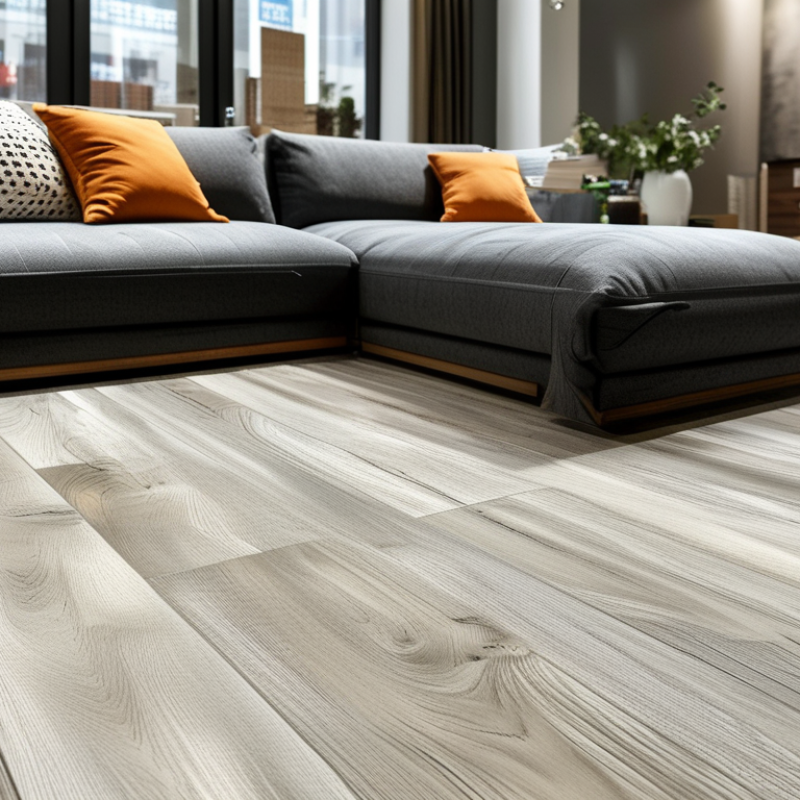
SPC click flooring combines a stone-polymer composite core with a decorative layer and a protective wear layer. Its rigid core helps reduce movement across ordinary subfloors. The click joint also allows floating installation without wet adhesive. It feels solid. That matters.
Global buyers choose SPC because it handles moisture, temperature changes, and busy traffic better than many traditional laminate products. Grand View Research valued the global luxury vinyl tiles market at approximately USD 18.7 billion in 2022 and forecast strong growth through 2030. SPC is one important segment within this wider resilient flooring category. Market demand reflects practical needs: quick renovation, lower installation disruption, and easier maintenance.
Performance still depends on details. A qualified installer should check subfloor flatness, expansion gaps, and room temperature before installation. ASTM F3261 covers rigid polymeric core flooring, while ISO 10582 addresses heterogeneous PVC floor coverings. These standards support clearer product evaluation, but they do not replace independent testing.
Look for verified slip resistance, wear-layer thickness, dimensional stability, and low-emission documentation. I would not call SPC indestructible. Heavy furniture can damage joints, and poor subfloor preparation may create hollow sounds or separation. Buyers should also review recycling instructions and local building requirements. The best choice is not always the thickest plank; it is the specification that matches the room, climate, and installation skill.

When comparing the top 10 SPC click floors for global buyers, begin with measurable construction details. Check the total thickness, wear layer, and limestone-to-resin balance. A thicker board is not automatically stronger. Density and locking precision matter more in daily use. Examine the click profile under bright light. Uneven edges can create gaps after repeated temperature changes.
Moisture resistance is essential in kitchens, bathrooms, and humid coastal regions. Ask for water-absorption results, dimensional-stability data, and test methods. Do not rely on the phrase “waterproof” alone. Check the recommended expansion gap for the local climate. A floor installed in a dry warehouse may behave differently in a tropical apartment. Slip resistance, fire performance, formaldehyde emissions, and indoor-air certifications should also be independently documented. Documents matter.
I have seen attractive samples fail because the subfloor was uneven. Installation guidance must specify acceptable flatness, underlayment use, and repair limits. Confirm carton dimensions, pallet protection, replacement-piece availability, and warranty conditions before ordering. Small details become expensive across borders. A reliable supplier should provide batch records, test reports, and clear responses from technical staff. Yet no ranking is perfect. One floor may perform well in a showroom but poorly under heavy furniture or rolling chairs. Real-world references are useful, although they can be incomplete. Look for long-term installations, not only polished photographs.
This benchmark compares the ten most important evaluation criteria commonly used by international SPC flooring buyers. Scores are weighted reference values on a 0–100 scale, reflecting practical requirements such as dimensional stability, locking performance, wear resistance, waterproofing, indoor-air quality, safety, acoustics, and installation reliability. Actual performance should be verified through product testing and applicable regional standards.
The top 10 SPC click floors should be compared by quality, design, and daily performance, not appearance alone. In practical showroom checks, dense cores feel more stable underfoot and resist minor dents better. Reliable click joints should close evenly without visible gaps. A balanced wear layer also helps protect against chair movement, grit, and frequent cleaning.
The strongest designs include pale oak, smoked walnut, warm maple, grey stone, terrazzo, concrete, herringbone, chevron, coastal pine, and dark slate effects. Wood visuals suit bedrooms and offices, while stone patterns work well in kitchens and retail spaces. Embossed surfaces usually look more realistic because texture follows the printed grain. Water resistance supports busy rooms, but it does not excuse poor subfloor preparation. Even premium flooring can sound hollow over uneven concrete. That weakness is easy to overlook.
Tips: Request samples in daylight and warm artificial light. Check the thickness, wear layer, click profile, and recommended room conditions. Walk across joined samples and listen for movement. Leave expansion space around walls and fixed cabinets. A thicker plank may feel better, but it is not automatically the best choice. Local installation skill can influence performance as much as the product itself.
Comparison of representative, brand-neutral SPC click-floor configurations based on commonly published market specifications
| Rank | SPC Floor Profile | Typical Construction | Overall Thickness | Wear Layer | Surface Finish | Common Plank Size | Click System | Water Resistance | Dimensional Stability | Acoustic / Comfort Features | Recommended Applications | Quality | Design | Performance |
|---|---|---|---|---|---|---|---|---|---|---|---|---|---|---|
| 1 | Premium Rigid-Core Plank | Multi-layer SPC core, UV coating, printed décor film, 0.5 mm wear layer, attached acoustic underlay | 6.0–7.0 mm | 0.5 mm | Registered embossing with matte polyurethane or ceramic-bead finish | 180–230 × 1,220–1,520 mm | Angle-angle or fold-down click | Waterproof surface | Strong resistance to normal temperature and humidity changes when installed with perimeter expansion gaps | 1.0–1.5 mm IXPE or EVA pad; improved footfall comfort | High-end residential, hospitality, retail, and light commercial areas | 9.5 | 9.2 | 9.5 |
| 2 | Commercial Heavy-Duty Plank | High-density stone-polymer core, reinforced click edge, 0.5 mm wear layer, commercial-grade protective coating | 5.5–6.5 mm | 0.5 mm | Low-gloss embossed texture with enhanced scratch and stain protection | 180–225 × 1,220–1,520 mm | Fold-down or reinforced angle-click | Waterproof surface | Very good resistance to indentation and routine commercial temperature variation | Optional attached pad; firm walking feel with good impact resistance | Offices, shops, restaurants, corridors, and rental properties | 9.3 | 8.6 | 9.6 |
| 3 | Wide-Plank Architectural Series | Rigid SPC core, high-resolution décor layer, painted bevel, 0.3–0.5 mm wear layer | 5.0–6.5 mm | 0.3–0.5 mm | Wood-grain embossing, four-sided bevel, extra-wide visual format | 225–305 × 1,500–1,830 mm | Angle-angle click | Waterproof surface | Good stability; requires careful subfloor preparation because wider planks show unevenness more visibly | Usually supplied with a separate or attached underlay | Open-plan homes, showrooms, hotels, and design-led interiors | 8.8 | 9.7 | 8.8 |
| 4 | Enhanced Stone-Look Tile | Rigid SPC tile core, mineral-look décor film, 0.3–0.5 mm wear layer, optional acoustic backing | 5.0–6.5 mm | 0.3–0.5 mm | Stone or concrete texture with low-gloss protective finish | 305–470 × 610–940 mm | Fold-down or angle-click | Waterproof surface | Good resistance to moisture-related movement; expansion gaps remain necessary | Warmer and less brittle underfoot than ceramic tile; underlay improves impact sound | Kitchens, bathrooms, entrances, cafés, and contemporary commercial interiors | 8.9 | 9.3 | 9.0 |
| 5 | Underfloor-Heating Compatible Plank | Low-thermal-resistance SPC core, thin multi-layer construction, 0.3–0.5 mm wear layer | 4.0–5.5 mm | 0.3–0.5 mm | Natural wood embossing with matte wear protection | 180–230 × 1,220–1,520 mm | Angle-angle click | Waterproof surface | Suitable for compatible low-temperature hydronic systems when surface-temperature limits are followed | Thin profile supports efficient heat transfer; underlay must be approved for radiant heating | Energy-efficient homes, apartments, offices, and renovation projects | 8.7 | 8.8 | 9.2 |
| 6 | High-Definition Wood Replica | Standard SPC core, high-resolution printed décor, synchronised embossing, 0.3 mm wear layer | 4.5–5.5 mm | 0.3 mm | Registered wood texture, natural knots, brushed and oiled visual effects | 180–230 × 1,220–1,520 mm | Angle-angle click | Waterproof surface | Good dimensional stability under normal indoor conditions and correct installation | Attached 1.0 mm pad is common; balanced comfort for residential use | Living rooms, bedrooms, home offices, and medium-traffic residential spaces | 8.4 | 9.5 | 8.5 |
| 7 | Value Residential Click Plank | Standard SPC core, decorative film, UV coating, 0.2–0.3 mm wear layer | 4.0–5.0 mm | 0.2–0.3 mm | Embossed oak, walnut, pine, and stone visuals with standard matte finish | 150–230 × 900–1,520 mm | Angle-angle click | Waterproof surface | Suitable for stable indoor environments; subfloor flatness is important for click-joint performance | Attached pad may be included; moderate acoustic improvement | Bedrooms, living areas, apartments, and budget-conscious renovations | 7.9 | 8.4 | 8.0 |
| 8 | Extra-Thick Comfort Plank | 6.5–8.0 mm SPC assembly, reinforced core, 0.3–0.5 mm wear layer, thicker acoustic backing | 6.5–8.0 mm | 0.3–0.5 mm | Deep embossing with bevelled edges and premium low-gloss coating | 180–230 × 1,220–1,520 mm | Fold-down or angle-click | Waterproof surface | Very good rigidity and resistance to minor subfloor imperfections, subject to installation tolerances | 1.5–2.0 mm attached pad; improved underfoot comfort and impact-sound control | Upper-floor apartments, family homes, hotels, and renovation over sound-sensitive spaces | 9.0 | 8.7 | 9.0 |
| 9 | Fire-Performance Focused Plank | Rigid mineral-polymer core, low-flame-spread surface system, 0.3–0.5 mm wear layer | 5.0–6.5 mm | 0.3–0.5 mm | Low-smoke, low-gloss surface with wood or stone designs | 180–230 × 1,220–1,520 mm | Angle-angle or fold-down click | Waterproof surface | Stable in normal service conditions; fire classification must be verified for the complete tested assembly | Optional acoustic pad; performance depends on the underlay and floor structure | Multi-family housing, offices, education, healthcare, and public interiors | 8.8 | 8.2 | 9.1 |
| 10 | Quick-Renovation Slim Plank | Thin rigid SPC core, decorative film, UV-protective coating, 0.2–0.3 mm wear layer | 3.5–4.5 mm | 0.2–0.3 mm | Simple wood and stone visuals with smooth or lightly embossed texture | 150–230 × 900–1,520 mm | Angle-angle click | Waterproof surface | Good for refurbishment over suitable, level substrates; less tolerant of uneven floors than thicker products | Usually requires a compatible separate underlay unless an attached pad is specified | Fast residential renovations, rental units, retail refreshes, and low-clearance projects | 7.8 | 8.1 | 7.9 |
Top 10 SPC Click Floors for Global Buyers
Installation systems determine how well an SPC click floor performs over time. Most leading options use tongue-and-groove or angle-tap locking profiles. These systems allow floating installation without adhesive. The subfloor must be firm, clean, and level. A variation above 3 millimeters over 2 meters can create movement or open joints. Leave expansion gaps around walls, door frames, and heavy cabinets. Measure twice. In humid regions, installers should check moisture levels before laying planks. Poor preparation remains a common cause of failure.
Durability depends on more than thickness. A reliable floor usually combines a rigid SPC core, a stable wear layer, and suitable surface treatment. For busy shops, hallways, and rental homes, a thicker wear layer can reduce visible scratches. However, heavy products are not automatically better. I have seen thick planks fail because installers ignored uneven concrete. Click joints also need careful alignment; forced connections may break during seasonal movement. This detail is easy to underestimate.
Maintenance should stay simple and consistent. Sweep grit frequently, then use a damp microfiber mop with a neutral cleaner. Avoid flooding the floor or using abrasive powders. Felt pads under chairs help protect the surface. Use entrance mats near exterior doors, especially in snowy or sandy climates. Replace damaged planks rather than sealing them with unsuitable glue. No floor is maintenance-free. Global buyers should request installation instructions, test reports, and clear warranty conditions before ordering. Some specifications still need independent verification.
Global buyers should evaluate suppliers before comparing SPC click floor designs. A polished sample proves little. Request production samples from the actual factory, not only showroom pieces. Check core thickness, wear-layer measurement, locking accuracy, and surface consistency under bright light. Small gaps can appear after installation. Ask for independent laboratory reports covering dimensional stability, abrasion resistance, slip performance, and emissions. Standards vary by destination, so confirm the required test methods with local import advisers or accredited laboratories. Product certificates without batch details deserve careful review.
Tips: Ask for the factory address, inspection records, material specifications, and recent test reports. Match every document to the exact product code. Request carton labels, installation instructions, and pallet photos before shipment. A supplier should explain tolerances clearly. Vague answers are warning signs.
Cost matters, but the lowest quotation may hide thinner wear layers, weaker locking profiles, or unstable backing materials. Compare complete landed costs, including packaging, replacement cartons, inspection, and installation waste. For larger orders, approve a sealed reference sample and use pre-shipment inspection. Keep written records of color, thickness, gloss, edge design, and packaging requirements. I have found that buyers often check appearance first and technical data later. That order should be reconsidered. Even experienced teams miss moisture conditions at the installation site, so request practical guidance for subfloor preparation and acclimatization.
