Choosing the best shipping cargo containers for 2026 requires more than comparing prices. Cargo weight, dimensions, temperature, route, handling equipment, and delivery frequency all influence the right specification. A standard 20-foot dry container may suit dense machinery, while a 40-foot high-cube unit offers extra height for cartons, furniture, or retail inventory.
Industry data shows why this decision matters. UNCTAD’s Review of Maritime Transport 2024 reported global container port throughput of approximately 858 million TEUs in 2023. It also highlighted continuing pressure from rerouting, port congestion, and changing trade patterns. The World Shipping Council and Container xChange reports similarly point to equipment availability, repositioning costs, and container imbalances as practical purchasing concerns. These pressures may continue into 2026, although no report can predict every port delay.
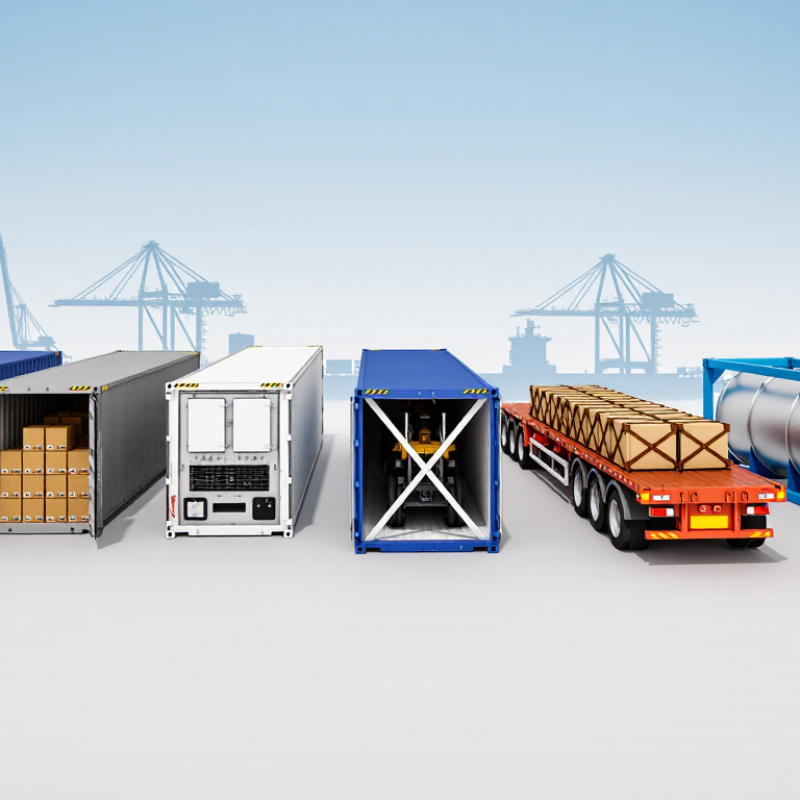
Lars Jensen, CEO of Vespucci Maritime, has described container shipping as “a very cyclical business.” That short observation deserves attention. A container that looks inexpensive may create higher costs through repairs, inland transport, or unsuitable loading space. Reefer containers need stable power and temperature monitoring. Open-top and flat-rack containers require careful cargo securing and route planning. Tank containers demand certified equipment and trained handling.
A neat ranking would be convenient, but misleading. Buyers should compare total operating value, not only the purchase quote. This guide examines dry, high-cube, reefer, open-top, flat-rack, and tank options for different cargo profiles. It also considers condition grades, inspection records, CSC compliance, ownership models, and resale potential. Small details matter. A damaged door seal can become a large invoice.
2026 Best Shipping Cargo Container Types for Buyers?
Define Cargo Requirements with ISO 668 Dimensions and Payload Limits
ISO 668 gives buyers a reliable dimensional framework for comparing cargo containers. A standard 20-foot container measures about 6,058 millimeters long, 2,438 millimeters wide, and 2,591 millimeters high externally. A 40-foot unit is approximately 12,192 millimeters long. High-cube models usually add about 305 millimeters of height.
Dimensions are only the starting point. Internal clearances shrink because of wall panels, doors, and floor construction. Measure your pallets, machinery, and loading equipment before choosing a type. A 40-foot container may offer volume, but a 20-foot unit can suit heavier cargo and tighter delivery sites.
Payload requires closer attention. ISO 668 does not replace the container’s safety plate or local transport rules. Calculate payload by subtracting tare mass from the permitted gross mass. Many units show a gross limit near 30,480 kilograms, but values vary by container design and certification. Check the door plate, inspection status, floor condition, and locking points.
I have seen buyers trust advertised capacity too quickly. That can create expensive handling problems. Weigh the actual cargo, including packaging and pallets. Leave practical clearance around doors and roof areas. Some choices look right on paper. A small measurement error can prevent loading entirely.

When comparing dry cargo containers in 2026, volume is a practical starting point for buyers. A 20-foot container offers about 33.2 m³ of internal space. A 40-foot container offers approximately 67.7 m³. The larger unit provides nearly double the capacity, but it may not suit every shipment. Warehousing access, delivery routes, and handling equipment can change the better choice.
In real loading reviews, carton size often wastes more space than expected. Irregular boxes create empty corners. Pallets also reduce usable volume. A 20-foot container may work well for dense cargo, machinery parts, or smaller purchase orders. A 40-foot container becomes more efficient when products are light, uniform, and shipped in larger batches. However, volume alone is not enough. Weight limits, cargo balance, ventilation needs, and door dimensions require careful checking. These figures are useful references, not absolute promises.
For buyers comparing 2026 shipping cargo container types, reefers deserve close attention when cargo must stay between −30°C and +30°C. These powered containers use mechanical refrigeration, insulation, airflow channels, and digital controls. A standard reefer may suit chilled produce, dairy, pharmaceuticals, or frozen foods, but each load needs its own temperature plan. Do not choose by temperature range alone. A unit reaching −30°C may still perform poorly if cargo blocks airflow or enters warm.
Experienced operators inspect the condenser, door gaskets, drain paths, and control panel before loading. They also confirm the container’s pre-trip inspection record and test its temperature sensors. Set points should reflect the cargo’s required internal temperature, not the surrounding weather. For sensitive goods, independent data loggers provide useful evidence during transit. Keep cartons off the floor and leave clear space near air outlets. Small details matter.
Buyers should compare power requirements, backup procedures, remote monitoring, and service coverage at ports and inland terminals. Ask how quickly faults are reported and who checks alarms outside business hours. Temperature mapping is worth considering because one corner can differ from another. Field experience shows that failures often come from rushed loading, not defective machinery. Preparation still matters. That is uncomfortable, but realistic. A reefer is only as reliable as its cargo arrangement, maintenance, and human oversight.
| Container Type | Typical External Size (L × W × H) |
Typical Internal Volume | Typical Maximum Payload | Temperature Capability | Best-Suited Cargo | Buyer Selection Guidance |
|---|---|---|---|---|---|---|
| 20 ft Standard Dry | 6.06 × 2.44 × 2.59 m | About 33 m³ | Up to about 28,000 kg | Ambient conditions only | General merchandise, machinery, packaged goods, furniture and dry materials | Not recommended for cargo requiring controlled temperature or humidity. |
| 40 ft Standard Dry | 12.19 × 2.44 × 2.59 m | About 67 m³ | Up to about 28,000 kg | Ambient conditions only | High-volume, non-temperature-sensitive cargo | Choose when cubic capacity is more important than temperature control. |
| 40 ft High Cube Dry | 12.19 × 2.44 × 2.90 m | About 76 m³ | Up to about 28,000 kg | Ambient conditions only | Lightweight, bulky cargo such as packaging, textiles and assembled products | Extra height improves volume efficiency but does not provide refrigeration. |
| 20 ft Refrigerated (Reefer) | Approximately 6.06 × 2.44 × 2.59 m | About 28–29 m³ | Typically about 21,000–27,000 kg | Approximately −30°C to +30°C | Frozen food, chilled food, pharmaceuticals, flowers and temperature-sensitive chemicals | A practical choice for smaller shipments, dense cargo and temperature-sensitive loads. |
| 40 ft High Cube Refrigerated (Reefer) | Approximately 12.19 × 2.44 × 2.90 m | About 67–68 m³ | Typically about 26,000–29,000 kg | Approximately −30°C to +30°C | Large-volume chilled or frozen food, fresh produce, medical products and other controlled-temperature cargo | The preferred option for most full-container temperature-controlled shipments when volume is required. |
| Insulated Container | Commonly available in 20 ft and 40 ft formats | Usually lower than an equivalent dry container | Depends on construction and container rating | Passive insulation; no active cooling | Short-duration moves and cargo that needs thermal buffering rather than continuous refrigeration | Use only when the cargo specification allows temperature variation and no active setpoint is required. |
| Open Top Container | Commonly available in 20 ft and 40 ft formats | Similar to a standard dry container, subject to cargo profile | Depends on the unit and shipping route | Ambient conditions only | Over-height machinery, stone, timber and cargo loaded from above | Not suitable for temperature-controlled cargo unless separately packed and managed. |
| Flat Rack Container | Commonly available in 20 ft and 40 ft formats | Open-sided or collapsible design; no enclosed volume standard | Varies by unit and cargo securing plan | Ambient conditions only | Heavy machinery, vehicles, steel structures and oversized project cargo | Select only for out-of-gauge cargo; it offers no enclosed temperature protection. |
Choosing a container for an oversized load starts with geometry, not habit. ISO 1496 provides technical references for container design, testing, and dimensions. Yet a compliant unit may still be unsuitable for a tall transformer, steel frame, or heavy machine. Measure the cargo after securing it. Include lifting points, timber supports, and protective packing. Small omissions create large surprises.
An open-top container suits cargo loaded by crane when height exceeds door clearance. Its removable roof supports vertical handling. However, the load must remain within permitted height and weight limits. Check the opening, floor strength, center of gravity, and tarpaulin clearance. Rain protection is not weatherproof protection. Water can enter around the cover. Use a loading plan with measured axle and corner weights.
A flat-rack works better when cargo exceeds standard width, height, or length, especially with controlled overhang. Its exposed sides simplify crane access and lashing. They also expose cargo to impact and weather. Secure every restraint through approved lashing points, then verify angles and tension. Experienced planners compare cargo drawings with the applicable ISO 1496 requirements, container documents, and route limits. A drawing can look correct and still fail at the port. I would not approve loading from dimensions alone. Photograph the empty unit, blocking, lashing, and final profile before dispatch. Recheck everything.
For buyers comparing shipping cargo container types in 2026, the CSC 1972 safety plate deserves close attention. It confirms that the container passed required structural safety checks when approved. Check the plate before discussing price. It should be securely attached, readable, and consistent with the container’s identification number. Review the approval number, manufacture date, maximum gross weight, stacking test value, and racking test value. Missing information creates uncertainty.
Certification is not the same as good condition. Inspect the roof, corner posts, doors, floor, and cross members. Look for heavy corrosion, bent locking bars, cracked welds, and water stains. Ask for recent inspection records and confirm whether the approval remains valid for the intended movement. A container may carry a CSC plate yet need repairs before practical use. That distinction is easy to miss.
Availability can change by port, size, season, and regional demand. Request current photos, plate details, and a physical inspection when possible. Calculate more than the purchase price. Include inland transport, port handling, customs charges, lifting, storage, repairs, testing, and delivery insurance. A cheaper unit may become expensive after flooring or door repairs. I would also allow a contingency budget, because condition reports are not always complete. Perfect certainty is rare, so record every unanswered question before payment.
Indicative total buyer cost comparison with CSC 1972 safety-plate and certification considerations.
| Container type | Typical internal volume | CSC plate and certification check | Availability |
|---|---|---|---|
| 20-foot dry container | Approximately 33 m³ | CSC safety plate normally fitted; verify valid examination date and maximum gross mass | Very high |
| 40-foot dry container | Approximately 67 m³ | Confirm plate legibility, owner code, serial number, tare, gross mass, and next inspection date | Very high |
| 40-foot high-cube dry container | Approximately 76 m³ | CSC status must match the unit identification and current structural inspection record | High |
| 20-foot refrigerated container | Approximately 28 m³ | Check both CSC validity and documented refrigeration-unit testing | Medium |
| 20-foot open-top container | Approximately 32 m³ | Verify CSC plate, roof-cover condition, top-rail condition, and loading limits | Medium |
The chart shows indicative 2026 used-container purchase totals in USD, including typical preparation and documentation allowances but excluding international freight, import duty, local taxes, and destination delivery. Actual prices vary by age, condition, location, inspection result, and market availability. A CSC 1972 safety plate should be legible, permanently attached, matched to the container identification number, and supported by a current examination record before purchase.