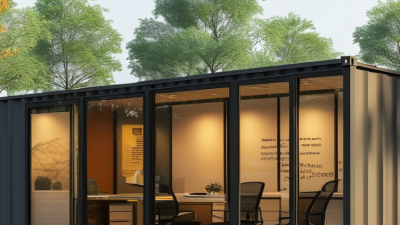
Choosing the best portable office container supplier in China requires more than comparing factory prices. Buyers must examine design control, steel specifications, insulation, fire performance, delivery records, and after-sales support. A low quotation can hide weak flooring, poor sealing, or costly site modifications.
The global modular construction market is expanding steadily. Mordor Intelligence reports continued growth, driven by faster project delivery, labor shortages, and demand for flexible buildings. McKinsey & Company’s report, “Modular construction: From projects to products,” estimates that modular construction could create more than $100 billion in annual value across Europe and the United States. These figures do not guarantee quality. They show why supplier verification matters.
Dr. Ryan E. Smith, an established offsite-construction scholar, describes the principle clearly: “Offsite construction is not simply about moving work indoors; it is about integrating design, manufacturing, and assembly.” A reliable portable office container supplier should demonstrate that integration through drawings, material certificates, production photographs, and inspection records. Ask for evidence.
Details matter. Check whether the container uses 50mm or 75mm insulation. Confirm the roof drainage slope. Inspect door frames, electrical protection, ventilation, and floor load capacity. Request a sample unit when possible. It is a slower step, but often a cheaper one.
This guide compares Chinese suppliers through a buyer-focused lens. It considers customization, certifications, production experience, packaging, transport coordination, and warranty clarity. No supplier is perfect. Even strong factories may communicate poorly or underestimate installation conditions. Careful questions remain essential.
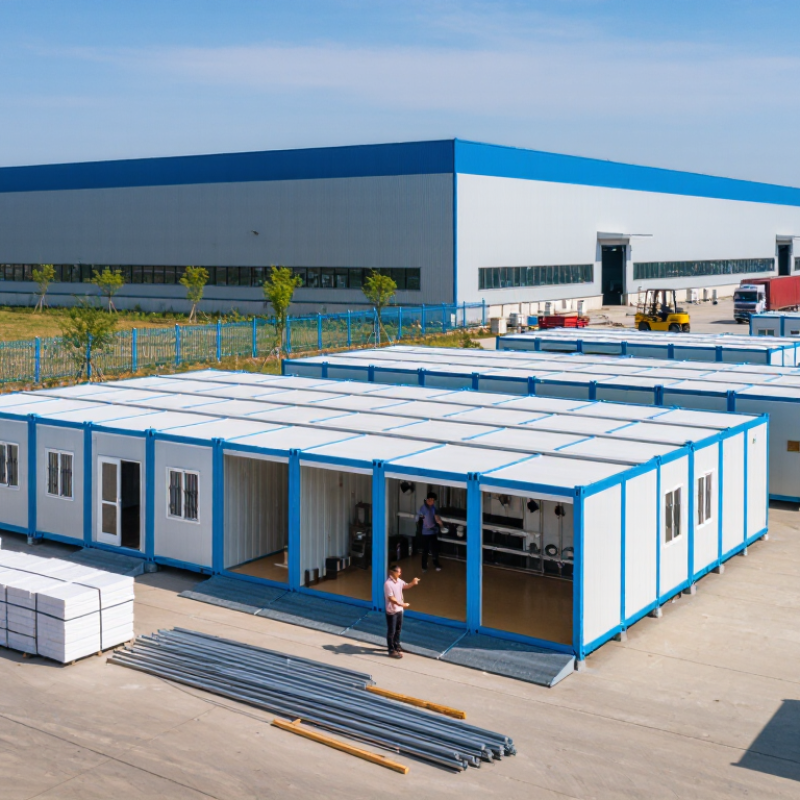
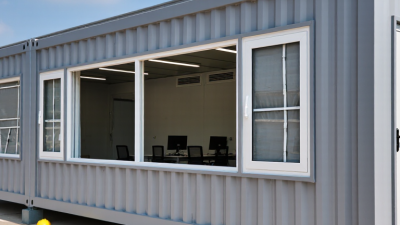
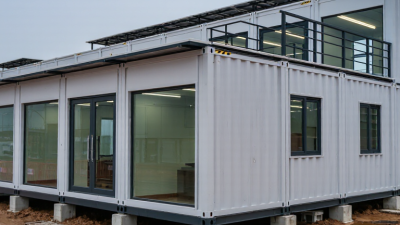
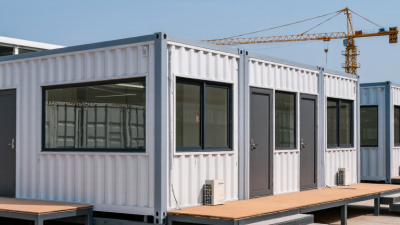
Portable office containers are factory-made, relocatable workspaces built inside steel modular units. They are not ordinary shipping boxes with desks added. A proper unit may include insulated wall panels, flooring, windows, lighting, wiring, ventilation, and a finished door. Some layouts provide one private office, while larger designs hold several workstations or a small meeting room.
Their main value is controlled, practical space. A construction site manager might place one beside a project entrance for plans, computers, and daily briefings. A school, warehouse, or event operator may need a temporary reception room without extending a permanent building. Lifting points and standard dimensions can simplify transport, but ground preparation still matters. The unit needs a level base, safe access, drainage planning, and correctly rated electrical connections. Details are easy to overlook.
From a buyer’s perspective, performance depends on climate, usage, and local requirements. Ask for panel thickness, insulation data, fire-safety documentation, load information, and installation instructions. Confirm whether furniture, air conditioning, plumbing, and permits are included. A low purchase price can become expensive after transport and site work. That assumption is often wrong. I have also seen plans fail because a door opened toward a narrow walkway. Good suppliers should provide drawings, material specifications, inspection records, and realistic delivery terms. Still, every document deserves checking against the actual site.
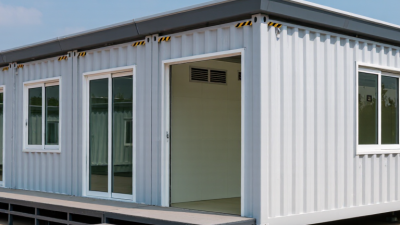
Portable office containers serve construction sites, remote projects, schools, and temporary administrative areas. Common types include flat-pack units, expandable containers, modular offices, and combined office-and-sanitary units. Flat-pack models transport efficiently, while expandable designs create more floor space after installation. Modular units suit larger projects requiring several connected rooms.
Practical features matter more than appearance. Check galvanized steel frames, insulated wall panels, waterproof roofs, durable flooring, and secure doors.
Good ventilation reduces condensation, especially in humid regions. Electrical systems should match local standards and project loads. Fire exits, emergency lighting, and accessibility features also require careful planning.
A small office may need desks, cable outlets, air conditioning, storage cabinets, and sound control. I have found that poor window placement can create glare and uncomfortable heat.
Tips:
Request drawings, material details, load data, and inspection records before ordering. Confirm transport dimensions and foundation requirements.
Custom options may include partitions, windows, doors, lighting, furniture, exterior colors, HVAC, and plumbing. Ask suppliers to provide sample layouts and realistic delivery timelines.
Do not accept vague promises. A cheaper unit can become expensive after installation changes. Even experienced buyers sometimes overlook drainage or winter insulation, so review the design with local professionals before production.
Choosing a portable office container supplier requires more than comparing catalog prices. McKinsey’s 2019 modular construction report found that modular methods can shorten project schedules by 20–50% and reduce costs by about 20%. These gains depend on disciplined production, not attractive sales language. Ask for factory audit records, production photos, welding procedures, and recent project references. A reliable supplier should explain steel grades, insulation thickness, floor loading, corrosion protection, and fire performance in measurable terms.
Request a sample unit or inspect one before placing a large order. Check door alignment, window seals, roof drainage, electrical routing, and weld consistency. Ask how the supplier controls dimensional tolerances during repeated production. Review inspection plans, material certificates, packing methods, and replacement procedures for damaged parts. Independent pre-shipment inspection is useful. It can reveal problems hidden by polished photographs.
Sustainability also deserves attention. The United Nations Environment Programme reported in its 2022 Global Status Report that buildings accounted for 34% of global energy demand and about 37% of energy-related emissions. Better insulation, durable coatings, efficient lighting, and reusable components can reduce a unit’s operating burden. Confirm that designs meet the destination’s building, electrical, fire, and structural requirements. A low quote still tempts buyers. It should not. I would also question vague warranties, rushed payment requests, and answers that change between departments. No supplier is perfect, and one overlooked detail can become an expensive site problem.
For buyers comparing China’s portable office container suppliers, quality begins with documented specifications. ISO 668 dimensions help control transport compatibility, while ISO 9001 certification supports consistent production processes. Ask for steel-grade records, welding inspection results, insulation thickness, fire-performance documents, and electrical test reports. A clean factory sample is useful, but it is not enough evidence.
Pricing needs a full cost sheet, not only a low factory quote. Include the unit, interior fit-out, packing, inland transport, sea freight, insurance, installation, and local duties. UNCTAD’s Review of Maritime Transport confirms that shipping carries over 80% of global merchandise trade by volume. Freight costs therefore deserve careful checking. The Drewry World Container Index also shows that spot container rates can move sharply between booking dates. A cheap quotation may age badly.
Delivery depends on drawings, production capacity, port schedules, and destination clearance. The World Bank’s 2023 Logistics Performance Index evaluates customs, infrastructure, shipment pricing, and timeliness; these factors can affect the final arrival date. Request a signed production schedule with inspection points and packaging photos. Factory experience matters here. Still, even experienced suppliers can miss a target when drawings change late. I would allow buffer time, especially for remote sites, unusual electrical systems, or multiple container units. Supplier claims should be checked against certificates, recent project records, and a third-party pre-shipment inspection.
| Evaluation Dimension | Practical Buyer Benchmark | Evidence to Request | Pricing and Delivery Consideration |
|---|---|---|---|
| Typical Office Module | Common footprints include approximately 6.0 m × 2.4 m and 12.0 m × 2.4 m, with customized layouts available. | General arrangement drawing, external and internal dimensions, floor plan, and loading details. | Larger or customized modules usually increase fabrication time, transport cost, and lifting requirements. |
| Structural Frame | Welded steel frame with documented steel grade, corrosion protection, and design loads suitable for the destination country. | Material certificates, welding procedure records, weld inspection reports, and structural calculations where required. | Heavier frames may improve durability but can raise crane, trucking, and foundation costs. |
| Quality Management | A documented quality management system aligned with ISO 9001:2015 is a useful supplier-screening benchmark. | Valid certificate, certification scope, issuing body, factory audit records, and inspection plan. | Stronger process control can reduce rework, replacement costs, and schedule risk. |
| Insulation and Energy Performance | Insulated sandwich panels with a specified core material, thickness, thermal conductivity, and fire-performance rating. | Panel technical data sheet, fire-test documentation, U-value or thermal-conductivity data, and installation details. | Higher insulation performance may increase unit price but can reduce heating and cooling demand. |
| Fire and Building Compliance | Compliance must be checked against the destination jurisdiction; requirements may cover fire resistance, escape routes, electrical systems, and occupancy use. | Applicable test reports, product declarations, electrical certificates, and local approval documentation. | Local engineering review and compliance upgrades can add cost and several weeks to the schedule. |
| Electrical and Plumbing Systems | Systems should match the destination voltage, frequency, plug configuration, water fittings, drainage requirements, and applicable electrical code. | Single-line diagram, circuit protection schedule, wiring specifications, pressure-test records, and commissioning checklist. | Factory pre-installation can shorten site work, while non-standard specifications may require additional engineering. |
| Indicative Unit Price | Basic office modules commonly fall around USD 3,000–8,000 per unit before international freight, duties, site works, and taxes. | Itemized quotation showing frame, panels, doors, windows, flooring, electrical package, packaging, and exclusions. | Fully fitted, insulated, sanitary, or heavily customized units can exceed this range substantially. |
| Sample and Inspection | A pre-production drawing approval and final pre-shipment inspection should be included for customized orders. | Approved sample, inspection checklist, dimensional report, photo records, and third-party inspection option. | Inspection fees are usually minor compared with the cost of correcting defects after shipment. |
| Production Lead Time | A typical standard order may require approximately 20–45 calendar days after drawing confirmation and deposit. | Production schedule, milestone dates, capacity confirmation, and change-order procedure. | Custom engineering, peak-season demand, and late approvals can extend the lead time. |
| Packaging and Shipping | Packaging should protect corners, panels, glazing, fixtures, and moisture-sensitive materials during handling and ocean transport. | Packing list, package dimensions, gross weight, container-loading plan, photographs, and cargo insurance terms. | Freight is influenced by volume, weight, destination port, container availability, and seasonal rates. |
| Delivery Terms | Compare EXW, FOB, CFR, and DAP quotations on the same specification and clearly defined responsibility split. | Pro forma invoice, Incoterms® 2020 term, port of loading, insurance responsibility, and destination charges. | A low factory price may exclude inland transport, customs clearance, import duties, unloading, or installation. |
| Warranty and After-Sales Support | A written warranty should define coverage, duration, exclusions, spare parts, response time, and remedy for defects. | Warranty certificate, spare-parts list, installation manual, maintenance schedule, and claims process. | Clear after-sales terms reduce downtime and unexpected replacement or service costs. |
Note: Price and lead-time figures are indicative buyer benchmarks for standard configurations. Final costs depend on specifications, order quantity, destination, applicable regulations, freight rates, duties, taxes, and installation requirements.
China Best Portable Office Container Supplier for Buyers?
Step-by-Step Buying Guide for International Buyers
Define the container’s purpose before contacting any supplier. Will it serve as a site office, reception room, clinic, or temporary classroom? Record the required floor area, number of users, climate, and expected service life. Include door width, window placement, insulation, electrical voltage, and plumbing needs. A clear specification reduces expensive revisions.
Request technical drawings, material details, production photos, and a complete quotation. Check the frame steel grade, wall panel thickness, roof drainage, fire performance, and floor loading. Ask whether the supplier can provide test reports and export documents for your destination. Local building rules still apply. Confirm this with a qualified inspector, not only with sales staff.
Compare suppliers by quality control, communication, lead time, packing method, and after-sales support. Ask for a sample unit or arrange an independent factory inspection before final payment. Review the contract carefully. It should state dimensions, tolerances, delivery terms, warranty scope, spare parts, and remedies for defects. Never judge value from price alone. A cheaper unit may need stronger foundations or costly site modifications. Small omissions matter. I would also allow extra time for customs clearance and weather delays. No buying checklist is perfect, and real sites often expose assumptions hidden in drawings.
Container size is a key consideration when comparing portable office suppliers. The chart shows the approximate internal floor area of common container formats, helping international buyers match unit size with workspace requirements and transport planning.
Data uses common ISO container internal dimensions: approximately 2.35 m internal width, with standard internal lengths of 2.83 m, 5.90 m, and 12.03 m. Actual dimensions may vary slightly by manufacturer, construction method, insulation, doors, and interior finishes.