Top Metal Storage Containers for Global Buyers?
Global buyers are reassessing metal storage containers as logistics networks become more complex. UNCTAD’s Review of Maritime Transport 2024 reports that global seaborne trade reached approximately 12.3 billion tonnes in 2023. That volume creates pressure for safer, stackable, and longer-lasting storage solutions.
Steel remains central to this demand. World Steel Association data shows that global crude steel production reached about 1.89 billion tonnes in 2023. Its World Steel in Figures 2024 report also highlights steel’s strong recovery potential. However, recycled content alone does not guarantee a dependable container. Wall thickness, weld quality, corrosion protection, door alignment, and load ratings matter more in daily use.
Small details matter.
As Edwin Basson, Director General of worldsteel, has emphasized, “Steel is essential to our modern world.” That principle applies directly to metal storage containers used in warehouses, manufacturing plants, ports, and construction sites. Buyers should compare verified specifications instead of relying only on attractive prices or broad sustainability claims.
The strongest options usually combine weather-resistant coatings, reinforced corners, secure locking systems, and documented manufacturing controls. ISO 9001 certification can support process consistency, but it cannot replace physical inspection. A practical buyer should check sample containers, coating thickness, drainage design, and repair access before placing a large order.
Some market comparisons remain imperfect. Product dimensions, testing methods, and regional terminology often differ. Therefore, global buyers need a clear evaluation framework. This guide examines leading metal storage containers through durability, customization, compliance documentation, shipping practicality, and total ownership cost. The cheapest unit may not remain economical after rust, repairs, and replacement delays.
Types and Structures of Metal Storage Containers
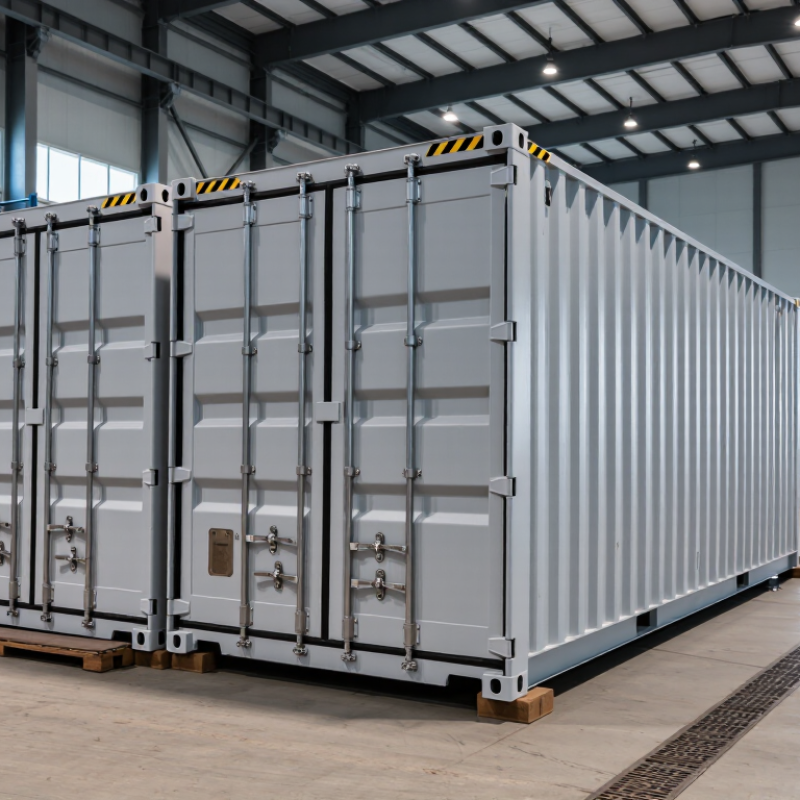
Metal storage containers vary by load, access, and transport conditions. Welded steel bins suit dense parts, tools, and industrial components. Their reinforced corners handle repeated forklift movement. Stackable models use formed feet and top rails for safer vertical storage. However, stacking height must match the manufacturer’s tested load rating.
Modular steel containers use panels, bolted frames, and removable doors. They are useful when warehouses change layout frequently. Weather-resistant units usually combine galvanized or coated steel with sealed roof joints. ISO 668 defines common freight-container dimensions, while ISO 1496 specifies strength and performance tests for freight containers. These standards help buyers compare external dimensions, corner fittings, and handling requirements. Small lockers and mesh-sided cages provide faster visual checks. They are less suitable for dusty or moisture-sensitive goods.
Global logistics also affects structure selection. UNCTAD’s Review of Maritime Transport reports that over 80% of world merchandise trade by volume moves by sea. Salt air, condensation, and long transfer times can expose weak coatings quickly. World Steel Association data recorded about 1.89 billion tonnes of crude steel production in 2023, showing the material’s broad industrial availability. Still, steel volume does not guarantee quality. I would inspect weld continuity, drainage points, door alignment, and coating thickness before purchase. A perfect specification on paper can fail beside a loading dock. That detail is easy to miss.
Materials, Coatings, and Protective Features
Metal storage containers for global buyers should be judged by materials, coatings, and protective features. Steel offers strong impact resistance and stable stacking performance. Aluminum weighs less and resists ordinary moisture, but it can dent more easily. Choose material according to load, climate, handling, and storage duration. Measure the actual contents, not only the listed capacity. Small errors matter.
Coatings protect metal from humidity, scratches, and surface corrosion. Powder coating provides an even, durable finish for indoor and moderate outdoor use. Galvanized layers offer stronger protection in damp environments. Epoxy coatings suit demanding conditions, especially when cleaning and chemical resistance matter. However, coating quality depends on surface preparation, thickness, and curing. Real environments are messy.
Protective design deserves equal attention. Look for reinforced corners, secure latches, smooth welds, and lids that resist forced opening during transport. A replaceable gasket can reduce dust and splash entry. Drainage points may prevent water from collecting beneath the container. Ventilation can reduce internal condensation, though it may weaken dust protection. In field inspections, I have seen excellent coatings fail around poorly sealed hinges. That detail is easy to overlook. Buyers should request coating specifications, salt-spray data, load ratings, and inspection records. Still, documents cannot replace a close physical check. Scratches, uneven seams, and trapped moisture often reveal more than polished product photos.
Capacity, Dimensions, and Load Requirements
For global buyers, container capacity starts with usable space, not the advertised length. A standard 20-foot unit usually offers about 33 cubic metres internally. A 40-foot unit provides roughly 67 cubic metres. ISO 668 dimensions support these common formats, but manufacturers allow small variations. Measure the door opening, floor length, and corner areas before ordering.
Load requirements need equal attention. A 20-foot steel container often carries a payload near 28,000 kilograms. A 40-foot model may carry about 26,000 kilograms because its maximum gross mass is commonly limited to 30,480 kilograms. These figures vary with tare weight, flooring, and construction. The International Maritime Organization requires verified gross mass for loaded containers in international shipping. Guessing is risky.
The World Bank’s Logistics Performance Index 2023 links reliable logistics with predictable delivery and infrastructure quality. That makes dimensions operational, not cosmetic. Buyers should request tare weight, maximum gross mass, payload, stacking limits, and certified lifting points. A pallet weighing 900 kilograms can exceed a floor’s concentrated-load tolerance. Use load-spreading plates where necessary. I would also allow 5–10% spare capacity, although this is not a universal rule. In practice, declared capacity can look generous. Actual loading conditions are less forgiving.
Top Metal Storage Containers for Global Buyers
Capacity, dimensions, and typical load requirements by standard container format
The 20-foot format provides the highest typical payload because its tare weight is lower, while 40-foot formats offer nearly twice the internal volume for larger storage requirements. Payload figures are calculated from typical maximum gross mass limits minus tare weight; actual limits may vary by container specification, route, and local regulations.
Reference basis: typical ISO dry-container dimensions and maximum gross mass specifications. Dimensions are internal measurements.
How to Compare Suppliers and Choose the Right Container
Choosing a metal storage container starts with the supplier, not the catalogue photo. In procurement reviews, I compare steel grade, wall thickness, weld quality, door seals, ventilation, and coating systems. Ask for batch-level inspection records, not general promises. The UNCTAD Review of Maritime Transport 2023 states that ships carry over 80% of global trade by volume. That makes predictable dimensions and lifting points essential for international handling.
Supplier reliability needs measurable evidence. The World Bank Logistics Performance Index 2023 assesses 139 economies through customs, infrastructure, shipment quality, logistics competence, tracking, and timeliness. Use these factors when checking delivery performance and export coordination. Request production lead times, packaging photographs, loading plans, and references from comparable markets. A low quotation can hide thicker paint claims, weak hinges, or expensive port adjustments. Check every detail.
Technical compliance also deserves attention. Confirm load capacity, stacking limits, drainage design, and corrosion protection for the destination climate. Salt air near ports can expose poor coatings within months. Ask whether tests follow relevant ISO or national standards, and verify the testing laboratory. I once focused too heavily on unit price and overlooked replacement-part availability. That mistake delayed deployment. Small details matter. A supplier that answers clearly, shares traceable documents, and accepts reasonable inspection usually presents lower operational risk. Still, no checklist is perfect; buyers should revisit assumptions after receiving the first production sample.