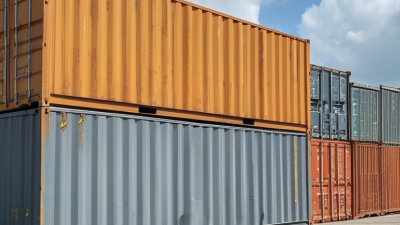
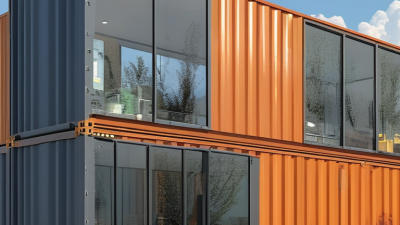
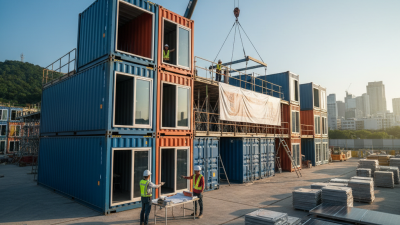
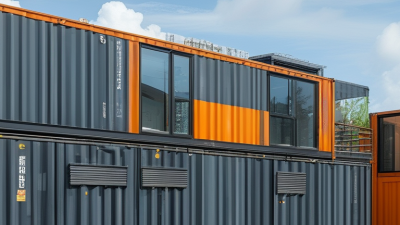
In 2026, global buyers are examining modular containers for faster, cleaner, and more adaptable construction projects. These units can support site offices, classrooms, clinics, retail spaces, and temporary accommodation. Their value depends on more than appearance. Buyers must compare structural design, insulation, fire performance, ventilation, transport limits, and installation requirements. A container that looks affordable may require costly foundation work, electrical upgrades, or local modifications.
Practical sourcing begins with verified specifications and clear supplier documentation. Check material grades, welding quality, corrosion protection, load calculations, and relevant international standards. Ask for factory photographs, inspection records, warranty terms, and delivery estimates. Container dimensions also matter when roads, cranes, ports, or narrow urban sites limit access. Some suppliers offer impressive customization, but every added window, partition, or plumbing connection can increase weight and maintenance needs. Small details matter.
There is no universal best option. Climate, project duration, local codes, budget, and after-sales support can change the decision completely. Even reliable quotations may shift when steel prices, shipping routes, or exchange rates change. Buyers should leave room for uncertainty. A careful comparison is often more valuable than the lowest initial price.
This guide reviews leading modular containers for global buyers in 2026. It focuses on practical performance, supplier credibility, long-term value, and realistic purchasing risks. The goal is simple: help decision-makers choose confidently, while recognizing that every project has different constraints.
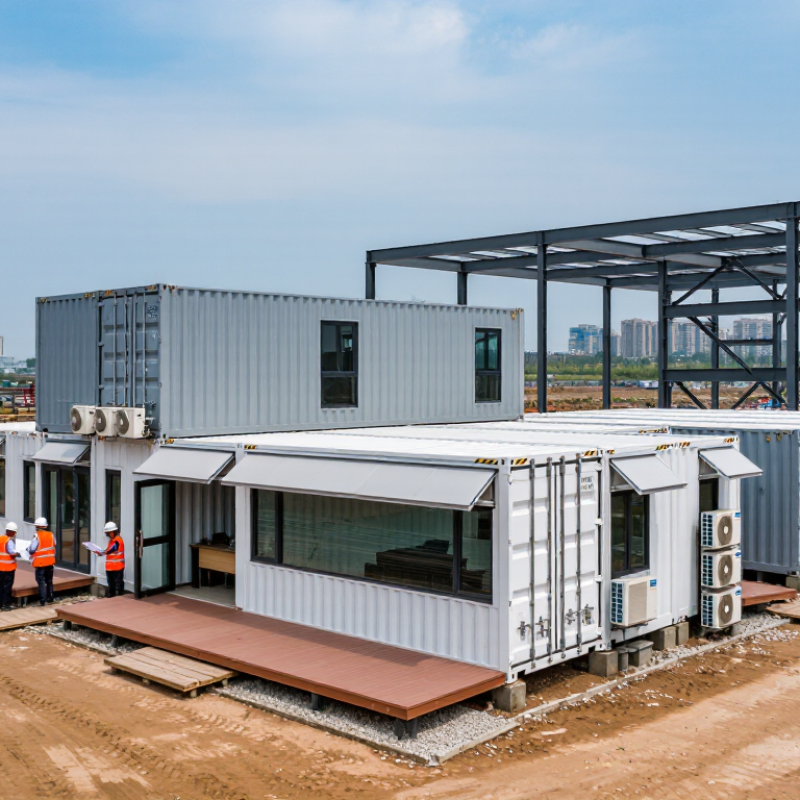
In 2026, modular containers will support faster, cleaner, and more adaptable construction. They are factory-made units designed for transport, connection, and repeated use. A unit may become a site office, classroom, clinic, storage room, or temporary accommodation. Standard dimensions simplify shipping and placement. Steel frames provide strength, while insulated panels improve indoor comfort. Factory production also reduces weather delays and material waste. From practical experience, accurate site measurements remain essential. A small error can affect doors, plumbing, and electrical connections.
Tips: Check insulation ratings, fire performance, ventilation, floor loading, and connection details before ordering. Ask for drawings, material specifications, test records, and installation guidance. Confirm transport limits and local building requirements with qualified professionals. Do not judge quality from photographs alone.
Global buyers will value modular containers because demand can change quickly. A growing company may need extra offices within weeks. A remote project may require secure rooms near difficult terrain. Units can be expanded, relocated, repaired, or reused more easily than many conventional structures.
However, modular does not mean maintenance-free. Seals may weaken, coatings can corrode, and poor foundations may cause movement. Buyers should compare lifecycle costs, not only the initial price. Some designs look efficient but perform poorly in humid or freezing climates. That deserves honest review. Temperature, wind, moisture, accessibility, and local approvals should shape every specification.
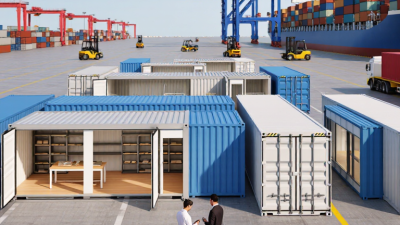
2026 Top Modular Containers for Global Buyers?
Choosing a modular container starts with the application, not the advertised price. A dry storage container suits tools, spare parts, and packaged materials. It needs ventilation in humid coastal regions. Otherwise, condensation may damage contents.
Flat-pack and expandable units fit remote offices, classrooms, clinics, and temporary accommodation. They reduce transport volume, although repeated assembly can weaken seals and hinges. Sanitary containers add toilets, showers, and drainage zones for construction sites or emergency facilities. Refrigerated containers serve food, medicine, and laboratory materials, but require stable electricity, temperature monitoring, and qualified maintenance. That detail is often underestimated.
UNCTAD’s Review of Maritime Transport 2024 recorded about 12.3 billion tons of seaborne trade in 2023. This supports demand for modular units that move efficiently between ports and inland sites. Grand View Research estimated the global modular construction market at about USD 91.97 billion in 2022, with continued growth projected through 2030. These figures suggest opportunity, not automatic suitability. A buyer should verify ISO dimensions, lifting points, fire performance, insulation values, electrical standards, and local permits. A 40-foot unit may offer useful capacity, yet it can be impractical on narrow urban roads. My own selection rule is simple: match climate, handling equipment, occupancy, and service access before comparing finishes. No matrix is perfect. Real sites remain messier.
Typical internal volume by modular container type. Dry containers suit general cargo, high-cube units maximize volume, refrigerated containers protect temperature-sensitive goods, and open-top units support oversized or crane-loaded cargo.
Values are representative nominal internal volumes in cubic metres based on commonly used ISO container dimensions; exact capacity varies by manufacturer, insulation, doors, and equipment configuration.
2026 Top Modular Containers for Global Buyers?
How Should Buyers Compare Materials, Designs, and Customization Options?
Choosing a modular container starts with its working environment, not its appearance. I have inspected units used near coastlines, construction sites, and remote warehouses. Each location exposed different weaknesses. Galvanized steel offers strength and impact resistance, while aluminum reduces weight and may resist corrosion better. Insulated sandwich panels help control interior temperatures. However, panel thickness alone does not guarantee efficiency. Buyers should request thermal data, coating details, floor-load ratings, and documented testing before comparing prices.
Design affects transport, installation, and long-term maintenance. Check whether panels, doors, and roof sections can be replaced individually. Standard dimensions often simplify shipping and stacking, but unusual layouts may increase handling costs. Custom options can include windows, partition walls, ventilation, electrical outlets, flooring, and access ramps. Ask for drawings with exact measurements. Small errors become expensive on site. A supplier’s past project records, quality procedures, and after-sales response also reveal reliability. Attractive renders are not evidence.
Tips: Compare complete delivered costs, not only the container price. Confirm corrosion protection for humid regions and stronger insulation for cold climates. Request material samples when possible. Check hinges, seals, locks, and drainage points by hand. They often reveal poor workmanship first. Leave room for revision. No comparison is perfect. A carefully documented specification usually prevents more trouble than a rushed customization decision.
Comparative reference table for commonly specified modular container solutions. Dimensions, weights, and performance values are typical ranges and should be confirmed against the final engineering drawings.
| Modular container type | Primary structure and materials | Common external size | Typical tare weight | Thermal and weather performance | Typical design applications | Common customization options | Logistics profile | Best suited to |
|---|---|---|---|---|---|---|---|---|
| Flat-pack modular container | Galvanized or painted structural steel frame; insulated sandwich wall and roof panels; steel or cement-board floor system. | Approximately 6,058 × 2,438 × 2,591 mm for a 20-foot module. | About 1.5–2.5 tonnes, depending on floor, insulation, and fittings. | Typical insulated panels use mineral wool, EPS, or PIR cores; performance depends on thickness, joints, and local climate design. | Temporary offices, accommodation, classrooms, site facilities, and worker housing. | Door and window layouts, partitions, electrical packages, plumbing, kitchens, bathrooms, stairs, canopies, and façade finishes. | Efficient for containerized shipping; multiple units can be packed or nested for delivery. | Projects requiring rapid deployment and repeatable room layouts. |
| Expandable modular container | Steel chassis and folding steel wall assemblies with insulated panels, roof membrane, windows, and integrated services. | Transport width commonly near 2.5 m; deployed width often expands to approximately 6–8 m. | Usually about 3–5 tonnes per deployed unit. | Insulation and airtightness vary by panel system; requires careful sealing at folding joints and service penetrations. | Remote accommodation, emergency housing, offices, clinics, classrooms, and project camps. | Room plans, bathroom modules, kitchenettes, HVAC, solar-ready wiring, ramps, decks, security doors, and exterior cladding. | Low site assembly time, but needs lifting equipment and a level foundation for deployment. | Buyers prioritizing fast installation and a larger usable floor area. |
| ISO-sized converted container | Corten weathering steel shell, reinforced openings, insulated internal lining, steel floor, and marine-grade exterior doors or windows. | 20-foot: approximately 6,058 × 2,438 × 2,591 mm; 40-foot: approximately 12,192 × 2,438 × 2,591 mm. | Roughly 2.2–4.0 tonnes before specialist equipment and interior fit-out. | Strong weather resistance from the steel shell; insulation, condensation control, and thermal bridges require engineered treatment. | Storage, workshops, retail kiosks, security rooms, site offices, and specialized equipment housing. | Cut-outs, reinforced frames, roller shutters, ventilation, electrical systems, shelving, coatings, insulation, and internal partitions. | Compatible with established container handling and intermodal transport when structural modifications are properly engineered. | Buyers needing robust transport geometry and a durable steel enclosure. |
| Insulated sandwich-panel module | Light-gauge galvanized steel frame with PIR, mineral wool, or EPS sandwich panels and a coated steel roof system. | Common widths of 2.4–3.0 m; lengths typically configured from 3–12 m. | Approximately 1.0–3.0 tonnes, depending on dimensions and internal fit-out. | Panel core, thickness, fire classification, air sealing, and glazing determine thermal and fire performance. | Offices, classrooms, accommodation, medical rooms, cafeterias, and controlled-environment interiors. | Panel thickness, fire-rated assemblies, acoustic upgrades, colors, windows, partitions, ceiling systems, and cleanable finishes. | Lightweight compared with heavy steel modules; transport may require flatbed trucks or protected packing. | Projects where thermal efficiency, speed, and interior flexibility matter most. |
| Heavy-duty modular steel unit | Welded structural steel frame, reinforced floor beams, insulated walls, and corrosion-protected external coatings. | Typical module length 6–12 m; width commonly 2.4–3.6 m. | Approximately 4–10 tonnes, depending on structural loading and equipment. | Designed for higher floor loads and demanding environments; corrosion protection must match exposure conditions. | Workshops, power and utility enclosures, industrial control rooms, laboratories, and equipment shelters. | Craning points, raised floors, cable trays, fire-rated walls, blast-resistant features, HVAC, lifting beams, and equipment bases. | Requires route planning, lifting studies, and suitable foundations; generally less economical for small shipments. | Industrial buyers needing high durability, load capacity, and engineered integration. |
| Sanitary or welfare module | Steel or aluminum frame, moisture-resistant insulated panels, slip-resistant flooring, hygienic wall linings, and corrosion-resistant fixtures. | Typical width 2.4–3.0 m; length commonly 3–12 m. | Approximately 1.5–4.5 tonnes, depending on tanks, fixtures, and installed services. | Moisture control, ventilation, drainage falls, washable surfaces, and electrical protection are key performance factors. | Construction sites, public events, camps, schools, emergency response, and remote facilities. | Toilets, showers, changing rooms, accessible facilities, water tanks, wastewater tanks, boilers, ventilation, and lockers. | Utility connections and local plumbing regulations must be reviewed before shipment and installation. | Buyers needing pre-installed water, drainage, ventilation, and hygiene facilities. |
| Cold-room modular container | Insulated panel enclosure, vapor-tight joints, stainless or coated interior surfaces, refrigeration system, and insulated floor. | Common external lengths of 3–12 m; internal volume depends on panel thickness and equipment zone. | Approximately 2–7 tonnes, including refrigeration equipment and floor system. | Typical operating ranges may cover chilled or frozen storage; final temperature range depends on refrigeration design and insulation thickness. | Food storage, pharmaceuticals, laboratories, agricultural supply chains, and temperature-sensitive logistics. | Temperature monitoring, alarms, shelving, strip curtains, backup power, remote monitoring, hygienic finishes, and access control. | Needs reliable electrical supply, drainage where applicable, and service access around refrigeration equipment. | Buyers whose priority is controlled temperature rather than general-purpose accommodation. |
| Hybrid modular container | Combination of structural steel, insulated panels, glass or composite façade elements, and optional timber or engineered interior finishes. | Typical width 2.4–3.6 m; length commonly 6–12 m, with linked modules for larger plans. | Approximately 2–6 tonnes per module, depending on glazing and interior specification. | Can be engineered for residential or commercial comfort; glazing ratio, shading, insulation, and airtightness affect energy use. | Hospitality units, retail spaces, offices, education buildings, visitor centers, and premium accommodation. | Custom façades, large glazing, terraces, roof decks, smart controls, premium kitchens, bathrooms, accessibility features, and renewable-energy provisions. | More design-intensive; shipping, lifting, local approvals, and weatherproofing details require early coordination. | Buyers balancing modular speed with architectural appearance and user comfort. |
Buyer comparison checklist
Confirm local building codes, wind and seismic loads, fire classification, insulation thickness, corrosion environment, floor loading, foundation requirements, lifting points, electrical standards, plumbing connections, transport dimensions, installation tolerances, warranty terms, spare parts, and after-sales service before placing an order.
Global buyers should treat modular containers as engineered cargo, not oversized boxes. ISO 668 defines standard container dimensions, while ISO 1161 covers corner fittings. These details affect stacking, lifting, and vessel acceptance. A unit that misses standard dimensions may require special handling or breakbulk shipping. That changes the quotation quickly.
Standards matter more than appearance. The CSC Convention requires approved containers to pass structural safety inspections. Buyers should request load ratings, welding records, material certificates, and inspection dates. For electrical or residential modules, local building codes may also apply after arrival. A polished factory finish proves little. Documentation does.
Costs move in several layers. Product price, inland haulage, port fees, customs services, insurance, duties, and ocean freight all deserve separate lines. Drewry’s World Container Index has repeatedly shown sharp weekly swings in container rates, especially during route disruptions. UNCTAD’s Review of Maritime Transport 2024 also highlights continuing pressure from rerouting, congestion, and fuel costs. A low factory quote can become expensive at the destination port.
Measure every centimeter. Door openings, crane reach, and road permits can decide delivery. Flat-pack designs may reduce freight volume, but assembly adds labor and quality risks. One missing fitting can delay installation. That happens. Buyers should compare landed cost, not unit price, and allow contingency funds for delays. The World Bank’s Logistics Performance Index 2023 shows major differences in customs efficiency and infrastructure between markets. Local agents can help, but their estimates still need verification.
Global buyers should judge modular container suppliers by evidence, not polished catalogs. UNCTAD’s Review of Maritime Transport 2024 projects seaborne trade growth of 2.1% annually from 2024 to 2029. That growth increases pressure on delivery schedules, repair access, and documentation accuracy. Ask suppliers for factory audit records, welding procedures, material certificates, and recent export references. Verify every document with the issuing body.
A dependable supplier should build units around recognized standards, including ISO 668, ISO 1161, and ISO 1496 where applicable. Inspect corner castings, frame alignment, floor loading, roof drainage, and corrosion protection. Request a sample unit before placing a large order. Open the walls if possible. Hidden moisture damage can appear months later. Bureau Veritas’ Global Trends for Inspection and Certification reports consistently links third-party verification with stronger supply-chain confidence, although certification cannot replace physical inspection.
The World Bank’s Logistics Performance Index 2023 evaluates customs, infrastructure, logistics competence, tracking, and timeliness. Use those categories during supplier interviews. Request a shipment timeline with production, port handling, and inland delivery separated. In my supplier reviews, I once overvalued fast replies and underestimated after-sales capacity. That was a mistake. Reliable partners provide spare-part lists, warranty response times, and clear escalation contacts. Prices still matter. They should not lead. A cheaper container with weak sealing or delayed documents can cost more than the original saving. No supplier is flawless. The best ones disclose limitations early and correct them visibly.